Why nutrition, biology and protection during the earliest stages of development can influence an entire growing season.
Everything Begins Inside the Kernel
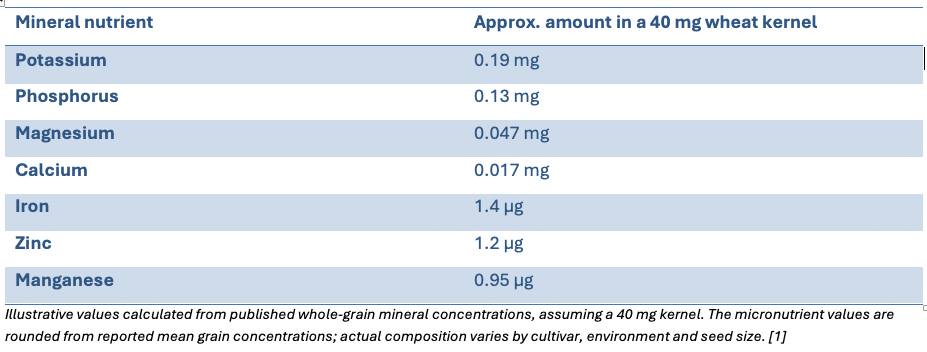
Every wheat plant begins with a remarkably small supply of resources. A single kernel contains the embryo, stored carbohydrates, proteins, and mineral nutrients needed to initiate germination. Those reserves support the earliest growth before the developing seedling can acquire sufficient nutrients from soil. [1]
From the moment a seed absorbs water, the aleurone layer surrounding the starchy endosperm releases enzymes that break down stored reserves. The scutellum channels those reserves to the embryo, which begins developing roots and shoots, all before the first leaf breaks through the soil. If so much depends on what happens before emergence, how can we better support the seed during those critical days?
Understanding these early processes helps inform how nutrition, biologicals, and protection can be combined into a treatment package that responds to grower needs.
As roots emerge, the seedling begins transitioning toward greater dependence on external nutrient sources. That transition is not always easy.
The Seedling’s First Nutritional Challenge
Phosphorus illustrates the challenge. It is essential for energy transfer, cell division and root development, yet it moves slowly through soil. Cold temperatures can further restrict root growth and nutrient acquisition, creating an early-season gap: young plants need phosphorus to build the root system required to access more of it.
Seed-applied nutritional primers address part of this challenge by placing small quantities of nutrients directly on seed. They do not replace a season-long fertility program. Rather, they supplement early nutrient availability while roots develop. Proper application can also standardize one part of the nutritional environment encountered by each treated seed.
But getting plants out of the ground is only part of the objective. Getting them established at a similar time matters, too.
Why Uniform Emergence Matters Beyond the Seedling Stage
Imagine two wheat plants seeded on the same day. One emerges promptly, starts photosynthesizing and establishes roots. The second emerges three days later, already competing with more developed neighbours. Both may survive, but they do not have identical opportunities for light, moisture, or nutrients.
Uneven emergence creates differences in growth stage. Herbicide applications must respect labelled crop stages; fungicide timing, especially for Fusarium head blight, depends on a narrow period around heading and flowering. Greater variability can make an appropriate field-wide application window harder to identify. [2, 3]
Differences in crop maturity can also complicate pre-harvest staging and harvest timing. Uniform emergence cannot guarantee uniform maturity, but can provide a more consistent foundation for crop management. [4]
Introducing a Biological Partner
As roots develop, they begin interacting with the soil’s microbial community. Some microorganisms are pathogenic; others, like Serendipita indica, establish beneficial relationships.
Serendipita indica is a root-colonizing fungus studied for its influence on nutrient acquisition, plant development and responses to stress. This introduces a useful distinction: nutritional primers supply nutrients, while beneficial microorganisms can influence how the plant acquires and uses available resources. Successful inoculation depends on the microorganism remaining viable and establishing an effective relationship with roots. [5]
What sets Serendipita indica apart is where it works. Many seed-applied biologicals, such as Bacillus-based products, act mainly at the root surface and in the surrounding soil, the rhizosphere. Mycorrhizal fungi colonize roots but depend on hyphal networks that extend out into the soil to gather nutrients. Serendipita indica is an endophyte: once its spores germinate, the fungus colonizes the developing root system and works from within the root, stimulating the plant’s own efficiency rather than acting only in the soil around it.
From inside the root, the fungus influences how the plant functions, including canola and other members of the mustard family (Brassicaceae). Colonization increases root transport channels, improving uptake of water and nutrients such as phosphorus, sulphur and iron. Treated plants also show higher chlorophyll content and greater tolerance of drought, salinity and temperature extremes.
Protection Completes the Picture
Even a well-nourished seedling with beneficial microorganisms can struggle under seed- or soil-borne disease pressure. Fungicide seed treatments help manage those threats. Together, nutrition, biology and protection address different needs: resources, beneficial root relationships and disease risk.
Compatibility matters. A mixture that looks physically compatible may still compromise a living inoculant. Seed treaters must consider formulation, application order, handling and storage, as well as current product-specific compatibility directions. [5, 6]
Putting the Agronomy Into Practice
ACTIVE PRIME™, a nutritional seed primer from Active AgriScience, and AGTIV IGNITE®, Premier Tech’s Serendipita indicainoculant, illustrate two distinct approaches that can be incorporated into seed treatment planning. Taurus Ag, which markets both ACTIVE PRIME™ and AGTIV IGNITE®, reports common-wheat vigour of 71% in untreated seed versus 78% with ACTIVE PRIME™ in third-party laboratory testing. [6]
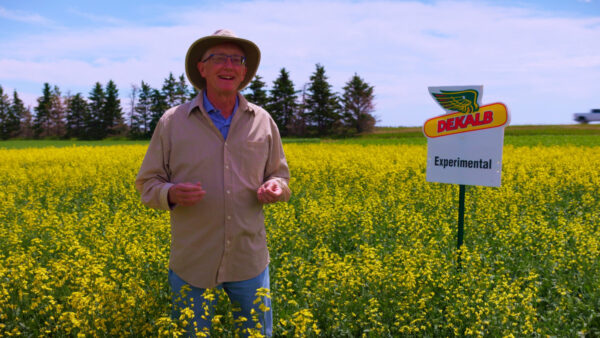
In a 2025 Peace Country, Alberta, field demonstration, canola treated with ACTIVE PRIME™ plus AGTIV IGNITE® yielded 28.3 bu/ac, compared with 25.7 bu/ac for the untreated check: a difference of 2.6 bu/ac, or about 10%.
A Strong Start Is More Than Emergence
Seed treatment is about more than whether a seedling breaks the surface. Early nutrition, biological relationships and disease protection help shape the conditions in which a crop establishes. Those conditions can influence plant competition, crop staging and management decisions later in the season.
For growers, the opportunity is to understand what each component contributes, and whether the complete program preserves those functions. The growing season does not begin when the crop emerges. It begins inside the seed.
Sources and editorial verification
1. Wysocka, K., et al. (2025). Mineral Concentration in Spring Wheat Grain Under Organic, Integrated, and Conventional Farming Systems and Their Alterations During Processing. Plants, 14(7), 1003. Open source ↗
2. Alberta Agriculture. Fusarium head blight – Best management practices. Open source ↗
3. Alabama Cooperative Extension. How a Wheat Plant Develops: Identifying Growth Stages. Open source ↗
4. Sask Wheat. Pre-Harvest Applications in Wheat (updated May 24, 2024). Open source ↗
5. Seed World Canada. Biological Seed Treatments Made Simple (August 27, 2026). Open source ↗
6. Taurus Agricultural Marketing. ACTIVE PRIME™ product, third-party vigour comparison. Open source ↗