Canada’s seed industry spends a lot of time debating who should pay for plant breeding. I’m beginning to think we’re overlooking a more difficult question.
There’s a tendency in agriculture to measure our commitment to innovation by how much money we put into research.
It’s understandable. Research funding is measurable. We can track government investments, calculate producer contributions and compare spending between countries. When a breeding program loses funding, we can point to a dollar figure and describe what’s at stake.
What’s much harder to measure is the cost of an innovation that never gets used. I’ve been thinking about that distinction lately, particularly after our latest On the Brink conversation with Nuffield Canada scholar Lauren Benoit. Her research into agricultural innovation around the world raises an uncomfortable reality: farmers pay for plant breeding whether they actively finance it or not. Sometimes that cost appears as a levy or a seed purchase. Other times, it’s the yield improvement or disease resistance they never receive because the research wasn’t done.
But there’s a third possibility that deserves more attention. What if the research gets done, the innovation exists, and farmers still don’t benefit? That’s where I think our discussion about the future of Canadian plant breeding needs to become more sophisticated.
Consider Quebec, where the Producteurs de semences du Québec is simultaneously defending public agricultural research and working to preserve incentives for certified seed use. At first glance, those seem like different priorities. One concerns the creation of improved genetics; the other concerns whether farmers purchase them.
But the connection is fundamental. Research only creates its full economic value when there’s a functioning system to move its results into farmers’ fields. And that system isn’t automatic. It depends on seed growers willing to multiply varieties, retailers willing to market them and farmers confident enough to change their practices.
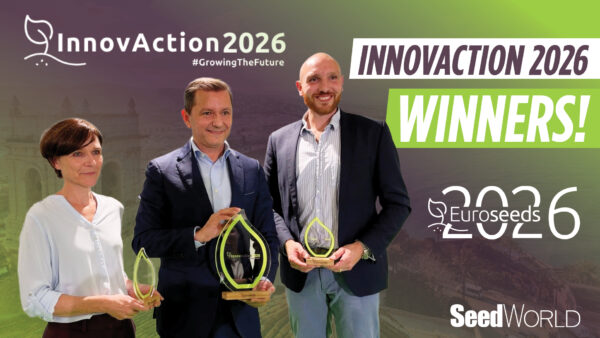
Now consider the innovations recognized at this week’s Euroseeds InnovAction competition. Seed coatings, technologies supporting establishment and microorganisms delivered directly into seeds are attracting attention. What’s interesting is that these aren’t necessarily improvements to a plant’s genetics. They’re attempts to improve what we can accomplish with the genetics we already have.
That distinction matters because it complicates our traditional understanding of how agricultural innovation moves from research to the farm.
On November 3, I’ll be moderating a webinar examining SeCan’s next 50 years. I’m particularly interested in what the next half-century will demand of the independent seed businesses that have helped commercialize Canadian varieties for decades. If a retailer is increasingly expected to understand genetics, biological products, seed treatments and their interactions, we’re asking that retailer to become something more than a distributor.
We’re asking them to help translate increasingly complicated science into practical farm decisions. Are we investing enough in that part of the innovation system? Do retailers have the independent evidence, technical support and economic incentives to take on that responsibility?
I suspect those questions will become every bit as important as how we fund breeding programs.
None of this diminishes the importance of public research. Quite the opposite. We need research that serves farmers even when the commercial incentive is weak. But we also need to recognize that producing knowledge and delivering value are different accomplishments.
Perhaps the real question isn’t simply whether Canada is investing enough in innovation. It’s whether we’re investing in all the things that allow innovation to matter.
We’ve become accustomed to thinking about plant breeding as a pipeline: invest money, develop a variety, deliver better genetics. But a pipeline implies that everything moves smoothly in one direction. Agriculture doesn’t work that way. A brilliant variety can struggle commercially. An excellent technology can fail under real-world conditions. And something that makes perfect scientific sense can make very little economic sense to the farmer expected to adopt it.
Benoit’s work reminds us that underinvestment has a cost. I’d argue that so does our tendency to define innovation too narrowly. Because the real return on agricultural research isn’t the number of varieties released, the technologies patented or the dollars invested.
It’s what actually changes on the farm.
And until we’re prepared to measure success that way, we may be congratulating ourselves on breakthroughs whose greatest potential remains unrealized.