Farmers say the next breakthrough matters, but only if it helps them manage uncertainty, stay profitable and create a future for the next generation.
Jamie Kress farms in a place where uncertainty is part of the job description.
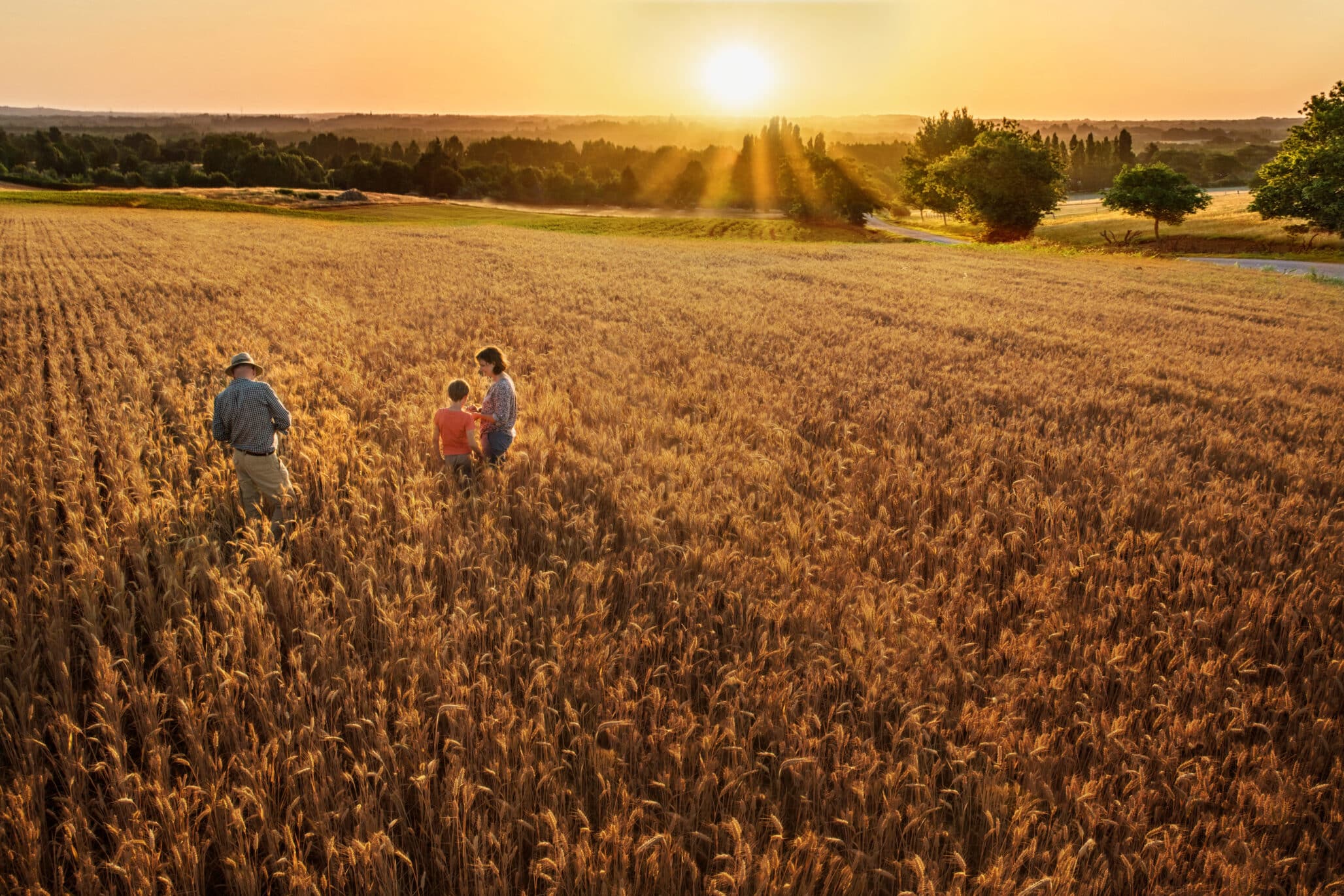
On her family’s dryland operation in southeast Idaho, annual rainfall typically ranges from 12 to 16 inches. Wheat, canola, safflower, mustard and pulse crops depend entirely on moisture that may or may not arrive when it’s needed. Some years bring relief. Others bring drought.

As both a grower and president of the National Association of Wheat Growers, Kress spends plenty of time thinking about the future of agriculture. While conversations throughout the seed industry often focus on gene editing, artificial intelligence, predictive breeding and the next generation of technologies, her priorities are more practical.
“Ultimately on the farm it’s always going to come back to what is going to help us produce more wheat with less input,” she says.
That answer surfaced repeatedly in conversations with growers from across North America.
Whether they farmed wheat in Idaho, fruits and vegetables in New Jersey, corn and soybeans in Missouri or canola in Saskatchewan, they described a future shaped less by a single breakthrough technology than by a growing list of uncertainties. Labor shortages, weather volatility, rising costs, market pressures, consumer expectations and questions about whether the next generation will return to the farm all ranked high on their list of concerns.
Innovation matters, they say. But only when it helps solve those problems.
For seed companies, that distinction may be one of the most important lessons growers have to offer. Farmers are not looking for innovation for innovation’s sake. They are looking for tools that help them manage risk, remain profitable and create opportunities for the next generation.
Innovation Has to Earn Its Place on the Farm
For growers, the value of innovation is rarely measured by the sophistication of the technology behind it.
It is measured by outcomes. Can it improve yield? Can it reduce inputs? Can it solve a problem that costs time or money?
Kress points to weed-control technology in wheat as one example of innovation that delivered tangible value.
“Technology like that has just been absolutely game changing for us,” she says. “It has been worth every penny, and then some, because we’re having cleaner fields. Cleaner fields lead to better stands and better yield.”
The reason she values the technology is straightforward.
“That’s a real-life example of the type of breeding and innovation that makes a difference on the ground to the farmer that I feel good investing in, because I can see that return.”
That return-on-investment mindset influences nearly every decision farmers make.
While researchers may focus on genetic gain, new breeding tools or emerging technologies, growers ultimately evaluate whether those innovations help improve the economics of the operation.
For wheat producers, that challenge has become increasingly difficult.
“We’ve had several years back-to-back where the rising cost of inputs has just outpaced the sales price for the commodity,” Kress says.
Against that backdrop, innovations that improve efficiency become especially valuable.
“Anything that is going to help us with climate change, so if that’s more drought-tolerant wheat, if it’s wheat that maybe has natural abilities to resist wet environments or pressure from a fungus or any of the diseases or insects,” she says. “Any of the natural tolerance. Ultimately, it’s always going to come back to what is going to help us produce more wheat with less input.”
The message for the seed industry is clear. Farmers appreciate innovation, but they do not adopt technology simply because it is new. They adopt it when it solves a meaningful problem and delivers measurable value.
The Customer Beyond the Farm Gate
Rebekah Modery spends more time talking directly with consumers than many farmers ever will.
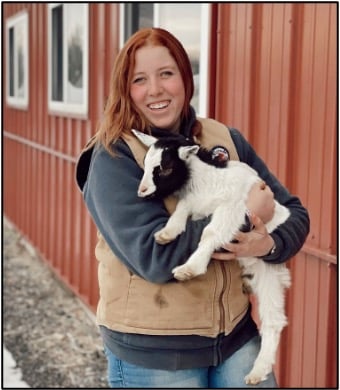
Her family’s operation – Alstede Farms in Chester, New Jersey – grows roughly 250 fruit and vegetable crops across 800 acres. Through farm stores, farmers markets and a 600-member CSA program, customers buy produce directly from the people who grow it.
That relationship gives Modery a unique perspective on consumer attitudes.
Some customers ask whether products are organic. Others ask whether they contain genetically modified ingredients.
Most, she says, are asking a much simpler question.
“The real heart behind their question is just, is it safe?” Modery says. “That’s all anybody is caring about.”
For seed companies, that perspective is worth considering.
Farmers may be the direct customer, but consumers increasingly influence which products succeed, which technologies gain acceptance and which production practices are embraced by the marketplace.
Kress sees the same dynamic from the perspective of a commodity grower.
“The seed dealer, or the developer, sees me as the customer,” she says. “It’s kind of funny, because I look to the elevator that buys my wheat as my end customer, because ultimately that’s who I need to keep happy, and that’s who writes my check. But it for all of us trickles all the way down to the person who eats and what they think of that product.”
That reality shapes how growers think about innovation.
Kress believes advancements in wheat breeding must deliver value not only to farmers but also to consumers who increasingly want to understand how their food is produced.
“I think we have seen that the consumer is far more interested in what they are eating than they have been prior,” she says. “If we can bring them in on some of this, the new traits or technology, I think there will be a lot more buy-in.”
Modery agrees.
Although her customers currently show little interest in genetically modified or gene-edited products, she sees those technologies as important tools for agriculture’s future.
“We only have a finite amount of land, and it’s actually shrinking, and the population is growing,” she says. “We need to be able to still feed those people on the same land we’re using now.”
At the same time, she recognizes that technology adoption often depends on public understanding.
“I find that consumers trust the medical field when there’s a new scientific discovery,” Modery says. “For some reason, in agriculture, that’s not the same sentiment.”
For growers, innovation does not end with scientific success. It must also earn public trust.
Managing Uncertainty
If there was one theme that united growers across crops, geographies and production systems, it was uncertainty.
For Modery, labor remains one of the biggest challenges facing her operation.
The farm relies on both H-2A agricultural workers and H-2B seasonal employees. This year, uncertainty surrounding visa approvals left the business struggling to plan for the season ahead.
“Imagine planning your whole year of your business not knowing if you’ll have the 45 workers that we apply for,” she says.
The operation eventually received workers, but not on the timeline it expected.
“We were supposed to have 16 workers on February 18, and 13 of them didn’t get here till March 18,” Modery says. “We lost an entire month of 13 guys worth of work.”
For a specialty crop operation, that kind of delay has real consequences. Crops still need to be planted, maintained and harvested on schedule, regardless of workforce challenges.
Weather presents another challenge.
A spring freeze can erase months of work in a matter of hours. To reduce that risk, the farm has invested heavily in frost-protection equipment, irrigation systems and production technologies designed to improve resilience.
“We’ve been constantly investing, constantly searching for new technology, new varieties of crops that are more drought resistant or more disease tolerant,” Modery says.
Thousands of miles away, Saskatchewan farmer Lesley Kelly described a similar reality.
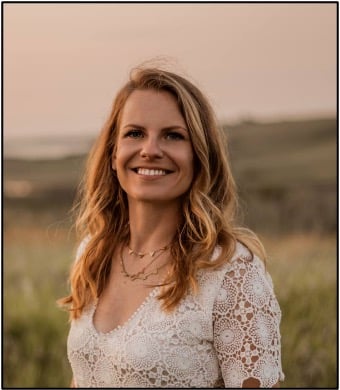
“The challenge that we face on our farm at a very macro level is just overall uncertainty,” Kelly says. “Uncertainty of markets, input prices, trade regulations, policy, market access. It all boils down to this one thing.”
Kelly has become a prominent advocate for farmer mental health, a topic she believes deserves more attention as producers navigate increasingly complex pressures.
In Missouri, Addie Yoder pointed to weed pressure and herbicide resistance as growing concerns. Other growers identified drought, disease pressure or market volatility as major obstacles.
The specifics varied from farm to farm.
The uncertainty did not.
That reality creates an opportunity for seed companies.
Not every challenge can be solved through genetics, but genetics can help reduce risk. Whether through stronger disease packages, drought tolerance, improved standability or better yield stability, innovations that increase predictability may ultimately deliver as much value as those that simply increase yield potential.
Building a Future Worth Passing On
Perhaps the most surprising answer growers gave when asked about their biggest challenge had nothing to do with technology.
Again and again, the conversation returned to succession planning.
For Yoder, the challenge is both deeply personal and incredibly complex.
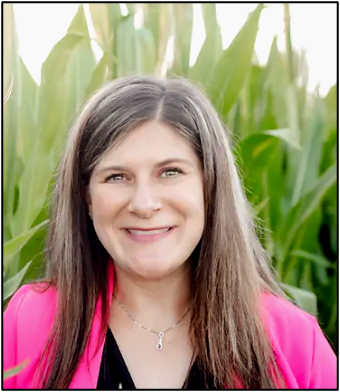
“It’s something that’s also out of our control,” she says. “There’s no magic wand. It’s just a million conversations.”
Kress faces a similar reality.
Her son is studying mechanical engineering. She hopes he will build his own career and gain experiences beyond the farm. At the same time, she wants to preserve the possibility that he may someday return.
“I need to hold a financial place for him,” she says.
That simple statement captures a challenge facing many farm families.
Today’s decisions are not just about this year’s crop. They are about whether the operation will remain strong enough to support another generation.
Modery is experiencing succession from a different perspective.
Her father began planning years ago for the eventual transition of ownership responsibilities. Today, she and her sister are stepping into those leadership roles.
“I have such an appreciation for planning it and having an idea before it happens,” she says.
For many growers, success is no longer measured solely by yield, profitability or innovation.
It is measured by whether the farm remains viable enough to hand to someone else.
The Question Behind Every Innovation
The seed industry has never had more tools available to drive innovation.
Gene editing is expanding what breeders can accomplish. Artificial intelligence is accelerating decision-making. New breeding technologies continue to push the boundaries of productivity and resilience.
Farmers welcome those advances.
But conversations with growers suggest that the industry’s biggest challenge isn’t developing innovation. It’s making sure innovation stays connected to the realities of the farm.
The technologies that succeed will not simply be the most advanced.
They will be the ones that help farmers manage uncertainty, earn consumer trust, remain profitable and create a future worth passing on.
In the end, the most important question facing the seed industry may not be what comes next. It may be who comes next.
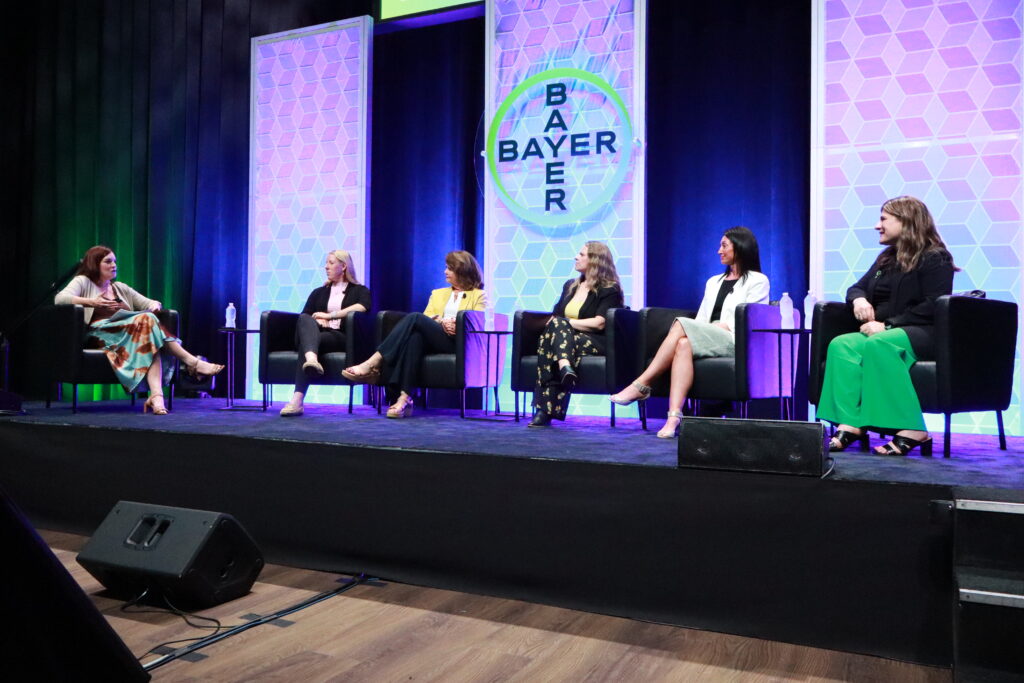
Editor’s Note: Bayer invited me to attend its Innovation in Crop Science (ICS) meeting in St. Louis, marking the first time the company has opened the event to media. The internal gathering brings together researchers and technical teams from across Bayer’s R&D organization to share ideas, discuss emerging science and explore new approaches to crop improvement. A highlight of the event was a grower panel and some follow-up interviews with farmers talking about their challenges and needs from our industry. I also had the opportunity to have one-on-one time with some of the panelists.