New tools, predictive models and systems thinking are helping breeders move plant breeding innovation faster while preparing crops for a more complex future.
Plant breeders have always chased the same goal: genetic gain.
Every improvement in yield potential, disease resistance, stress tolerance or agronomic performance traces back to a breeder’s ability to identify better genetics and move them into farmers’ fields. What has changed is the speed at which that work can happen.
Today, advances in artificial intelligence, predictive modeling, gene editing and data analytics are giving breeders new ways to evaluate genetics, understand environmental interactions and make decisions earlier in the breeding process.
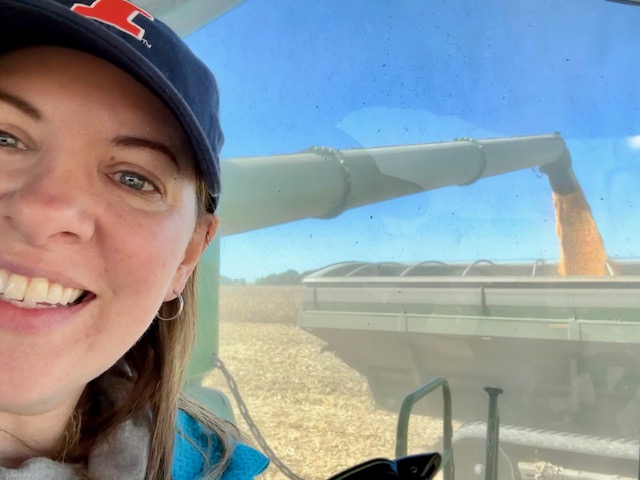
Bayer North America breeding lead Julia Honold believes the convergence of predictive breeding, AI and gene editing could create the next major jump in genetic gain.
“The expectation is that the rate of gain continues increasing,” she says. “There were paradigm shifts, like when we first started using hybrids, and you could see the gain just shot up. This is going to be the next one.”
For breeders, the next leap forward is not about replacing experience and intuition. It is about combining them with tools that help researchers evaluate more possibilities than ever before.
“It’s kind of superpowering our breeders,” Honold says.
A New Era of Predictive Plant Breeding
At its core, plant breeding remains remarkably simple.
“Breeding at its core is about taking diverse variation and then selecting the best version of that,” Honold says. “How we’ve done that over the past two decades has greatly evolved.”
The challenge has always been determining which genetics will perform best across thousands of acres and countless environmental conditions.
She says testing remains essential, but it also requires enormous investments of time and resources.
“Testing in many environmental scenarios is the most expensive thing we do,” Honold says. “It also takes a long time to really characterize and make sure that we know exactly how our seeds and traits are going to behave.”
That reality is driving increased interest in predictive breeding tools that allow researchers to evaluate performance before seeds ever reach a grower’s field.
“How we use those resources, that’s where AI comes in,” she says. “And then, how we superpower those decisions and that data is again where AI comes in.”
One example is digital twin technology, which combines environmental, weather, geographic and genetic data to simulate performance across a wide range of conditions.
“It’s a set of models that take in… climate information, geographical data, but also weather data and all these different inputs,” Honold explains. “It basically simulates performance on any given acre.”
The concept has roots in other industries, but agriculture presents a unique challenge because researchers are effectively trying to model biological systems and environmental variability simultaneously.
“For us, it’s much more complex because it’s environmental scenarios. We’re simulating nature,” Honold says. “But it’s incredibly effective because we can do fate analysis and we can look at historical data and run simulations and say this is how we predict this germplasm would have performed in these fields.”
The growing availability of data continues to strengthen those models.
“We have much more access to data than we’ve ever had,” she says. “Whether we’re buying satellite data, taking our own UAV (drone) data or we’re just inputting our standard automated mechanisms for collecting data, our ability to compute insane amounts of data is just rapidly increasing.”
The result is a breeding environment where researchers can evaluate more possibilities, more effectively prioritize resources and advance promising genetics faster.
“We can simulate millions of scenarios, climate scenarios, and then we can directly connect that to the genetics that we’re putting in the field,” Honold says.
Breeding for a Changing Environment
The push for better prediction comes as growers face increasingly complex production challenges.
Modern plant breeders aren’t simply chasing higher yields. They are also working to develop crops that can withstand shifting disease pressures, changing weather patterns and new environmental realities.
“We see the effects of climate change,” Honold says. “We see the patterns with all this data we’re collecting, for example, disease trends that used to be in warmer climates are now moving into other areas because those climates are getting closer to where those pathogens originally thrived.”
Those observations are pushing breeders to place greater emphasis on resilience alongside productivity.
For Honold, that work often conflicts with public perceptions about agriculture and plant breeding.
“I think some people feel like we’re working against nature and we’re really working with nature,” she says.
She adds that the goal is to help drive sustainable practices while breeding crops that can adapt to environmental changes.
“We want to create crops that are resilient to climate change,” she adds.
At the same time, she believes many people underestimate the challenges growers face every season.
“How hard it is to run a business and to be a farmer with all of these variables that they have to work with — I think it’s really shortchanged,” Honold says.
Looking Beyond the Seed
The conversation around innovation is also expanding beyond individual products.
For decades, success often centered on delivering the next better hybrid or variety. Today, companies increasingly evaluate how genetics fit within broader farming systems.
“I think we’re being much more deliberate about systems as well,” Honold says.
That means considering everything from crop rotations and cover crops to biofuels, soil health and digital management tools.
“We’re thinking about the whole system,” she says. “When are they planting corn? When are they growing soy? When can they use a cover crop and all the components in it?”
The industry no longer measures success solely by the performance of a single hybrid or variety.
“It’s not just, here’s the best corn we can give you,” Honold says. “Instead we ask what makes sense for the whole system and then all the different components around it?”
That systems-focused mindset is becoming increasingly important as the seed sector looks for ways to improve efficiency, create new revenue streams and support long-term sustainability in agriculture.
The Next Plant Breeding Innovation Curve
Many breeders use the term genetic gain to describe the steady improvement in crop performance over time. Every increase in yield potential, disease resistance, stress tolerance or agronomic performance reflects that progress.
The industry’s newest tools aim to accelerate those gains.
Advances in predictive breeding, larger datasets, digital modeling and gene editing are allowing researchers to evaluate more variation, make better decisions and move promising genetics through the pipeline faster.
With gene editing and increasingly sophisticated predictive tools, Honold expects breeders to access a broader pool of genetic variation and identify high-performing combinations more efficiently than ever before.
“With gene editing [the rate of genetic gain is] only going to increase, with more rapid mechanisms to sample a much greater pool of variation and then to test it both in silico and in the field,” she says.
The benefits ultimately extend beyond breeding programs.
For growers facing tighter margins, changing weather patterns and increasing production challenges, faster innovation could translate into better options and more resilient cropping systems.
“I think it’s really going to benefit the farmer,” Honold says, “because they’re going to see innovation much faster.”
Editor’s Note: Bayer invited me to attend its Innovation in Crop Science (ICS) meeting in St. Louis, marking the first time the company has opened the event to media. The internal gathering brings together researchers and technical teams from across Bayer’s R&D organization to share ideas, discuss emerging science and explore new approaches to crop improvement. The opportunity provided a rare behind-the-scenes look at the conversations, technologies and scientific advances shaping the future of plant breeding. Over the next several weeks, I’ll share insights from a series of interviews conducted during the event.