Certified seed growers are using AI to cut paperwork, sharpen decisions and reclaim time.
When most people in the seed industry hear artificial intelligence, they think about breeding pipelines, genomic selection or trait discovery.
Rachael Sharp is using AI in certified seed operations to decide where to haul a load of soybeans.
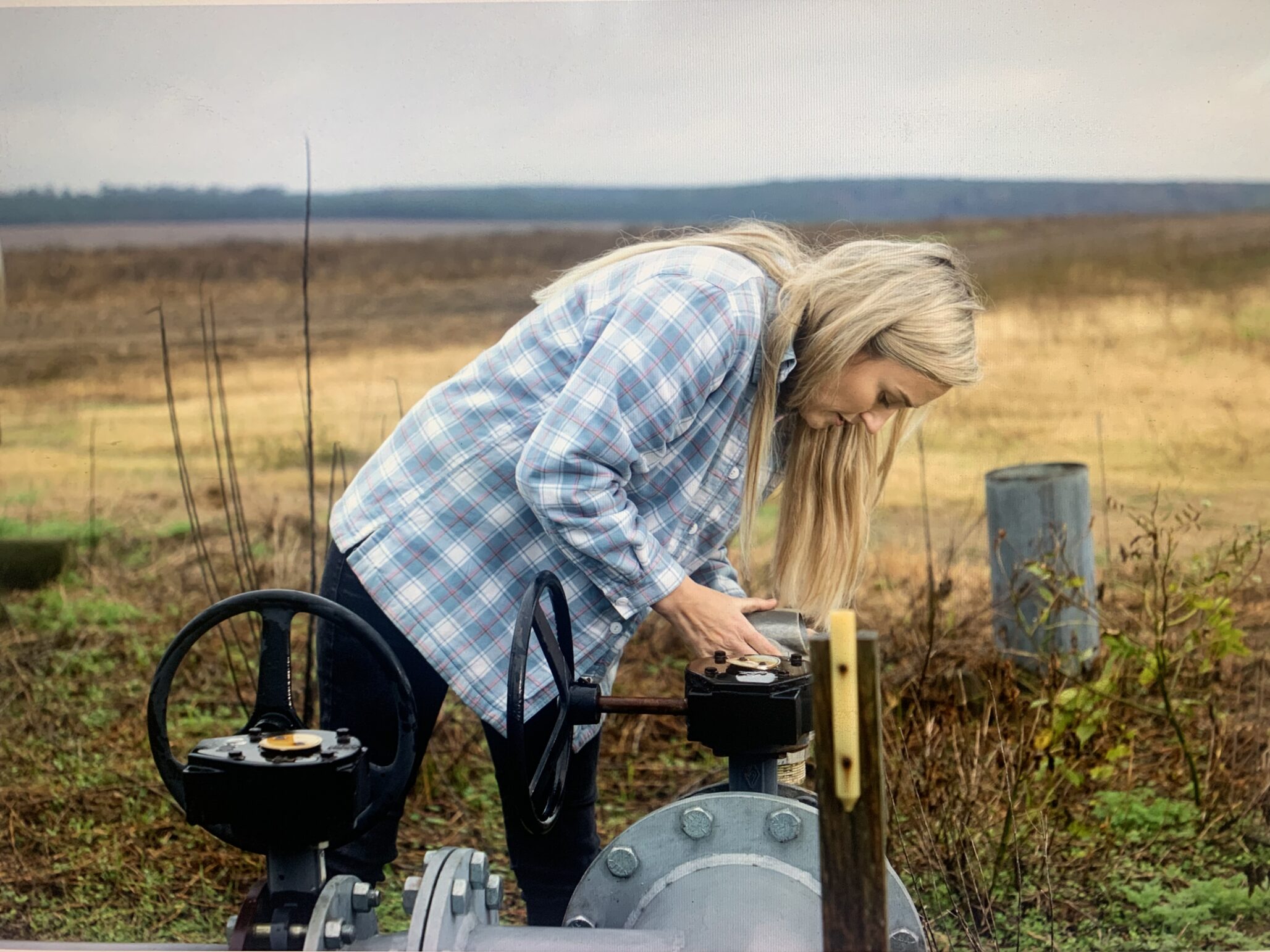
On her family’s multigenerational farm in Allendale, South Carolina, Sharp is using AI to make real-time decisions about logistics, recordkeeping and certified seed management — areas of the business that rarely make it into the broader AI conversation.
“I don’t have to guess whether it’s going to be more profitable for me to go to Newberry or Monetta or the port in Charleston,” Sharp says. “It tells me the best bet based on the price.”
That shift from instinct to instant analysis is moving from interesting to indispensable in how she runs operations.
Sharp didn’t come back to the farm with a background in agriculture. She studied English with a Shakespeare concentration at the University of Georgia and went on to earn a law degree before deciding that path wasn’t where she wanted to spend her days. What started as helping with bookkeeping quickly turned into ordering parts, managing inputs and eventually becoming a partner in Sharp & Sharp Certified Seed alongside her father.
Now, she is also leading one of the more unexpected transformations on the farm — integrating AI into nearly every layer of the operation.
From Clipboards to Real-Time Records
Certified seed production runs on data. Germination rates, lot numbers, field histories, compliance documentation — it all must be tracked, verified and ready to produce.
Sharp used to manage much of that through spreadsheets and paperwork. Today, she speaks it into her phone while standing in the field.
“I’ll say, ‘record that on May 11, 2026 I’m planting peanuts in the field behind the house,’” she explains. “Then when it’s time to turn in my 578 to FSA… it pops up with farm number, track number, field number, when it was planted. Something that used to take hours to do… it’s already done.”
The shift is not just about convenience. It is about eliminating friction in a system that demands precision.
“Anything that I was doing record keeping-wise on paper or even in an Excel document, it’s keeping record of now,” she says.
That includes tracking certified seed lots, monitoring germination results and even organizing storage inside her facilities.
“It’ll tell me this is the lot number you need to plant because the germ is this… or it’ll remind me to take another sample to the seed lab,” Sharp says.
In a business where traceability is non-negotiable, AI is becoming an operational backbone.
Decisions Get Sharper
Beyond recordkeeping, Sharp is using AI to guide decisions that directly affect profitability.
By feeding in transportation costs, elevator prices and delivery options, she removes guesswork from where to move grain.
“I’m not sitting there… asking where do we want to take it,” she says. “It tells me where we need to take it.”
She also leans on historical farm data to plan crop rotations, pulling from records dating back nearly a decade.
“I put in all the data from 2015, and it gives me a list of where I need to put stuff and explains why,” she says. “I don’t always go with it, but 95 or 96% of the time, it’s spot on.”
The technology is not replacing her judgment, but it is fine tuning it.
Time Back Where It Matters
For Sharp, the most meaningful impact of AI is not a yield bump or a cost savings line item. It is time.
“It frees up my time… so at the end of the day I’m not sitting in the office doing paperwork filthy from being outside in the field,” she says. “It frees up my time to be a human.”
That matters even more now, with her first child due later this year.
On the farm, the benefits show up in small but tangible ways. When a piece of equipment needs repair, she can upload manuals and get instant answers.
“That computer can’t turn the wrench,” she says. “But it can tell you which one to use.”
When OpenAI Came Calling
Sharp’s AI use has been for her personal business, but she wanted to pass on the knowledge but never expected OpenAI ChatGPT leaders to recognize it.
After briefly mentioning her approach during a Clemson AgTech forum, she received an unexpected phone call months later — one she initially dismissed as spam.
“Six months passed, and I get a phone call… and it says OpenAI, spam risk,” she recalls.
She declined the call, but then realized it was real.
Within a week, a film crew arrived at her farm. They spent days documenting how she was using AI in a working certified seed operation. The resulting video ran during major broadcasts, including the Super Bowl, and highlighted her farm as part of a broader effort to showcase how small businesses are applying AI.
The exposure led to more opportunities, including speaking engagements and even a trip to New York, where she met Oprah Winfrey at an event focused on AI and small business.
What Comes Next
Sharp is not done experimenting.
She is exploring ways to connect AI with irrigation systems to improve water use efficiency and is using it to help plan infrastructure upgrades across the farm.
“I’m using it as kind of an architectural friend,” she says. “(I ask it) Is it better to go this way or that way? And it’ll tell you why.”
There are still limitations. Integrating data from equipment platforms remains a challenge, and she sees room for improvement in mapping and system compatibility.
Even so, she says AI is not just a tool for research labs and breeding programs. On farms like hers, it has become a daily decision engine.
And in certified seed, where precision, documentation and timing matter, that shift may be one of the most practical applications yet.