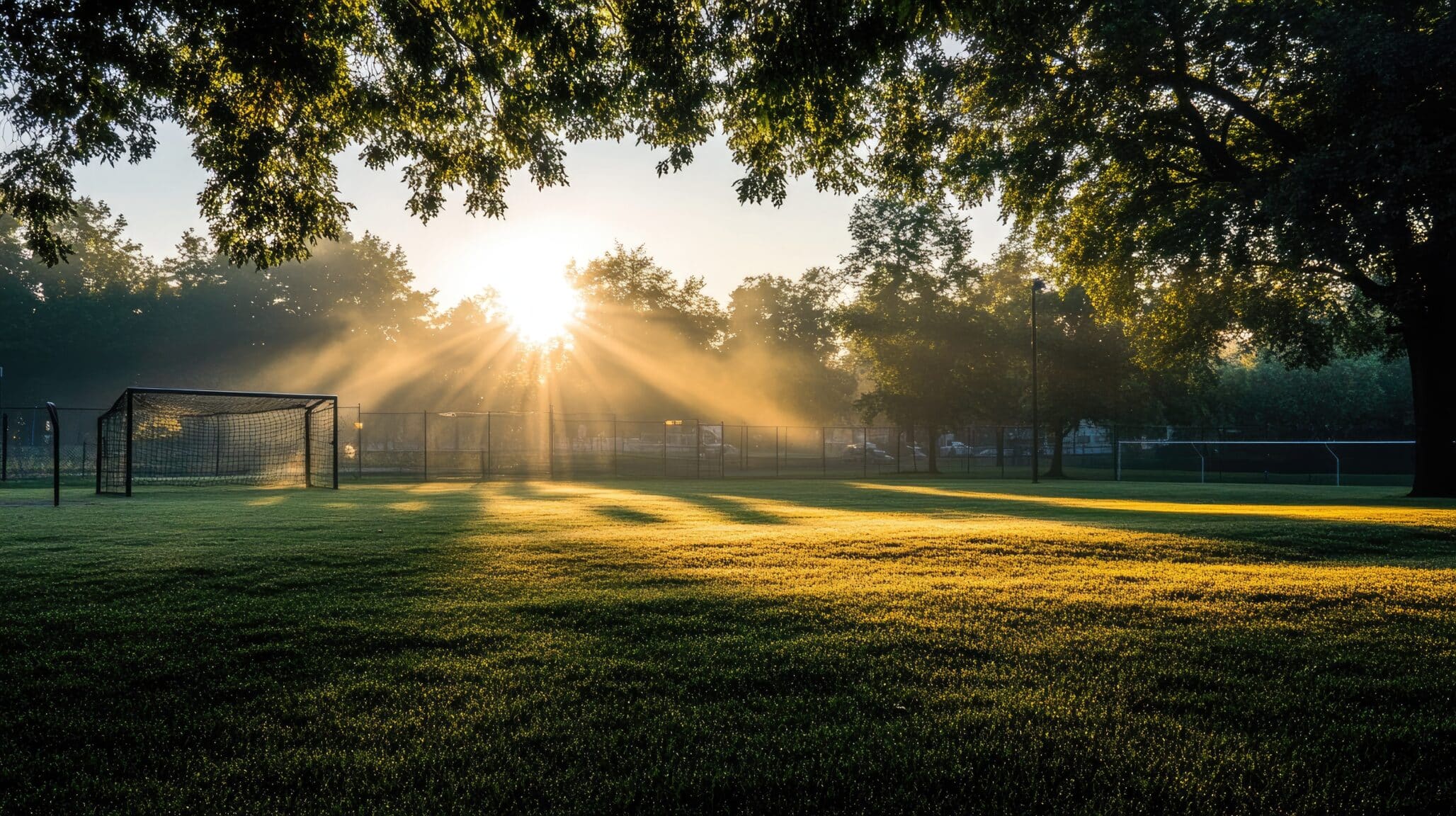
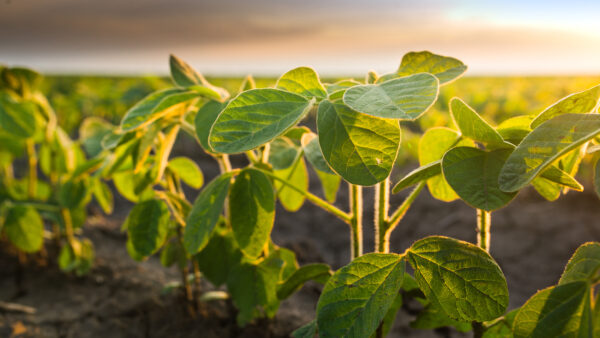
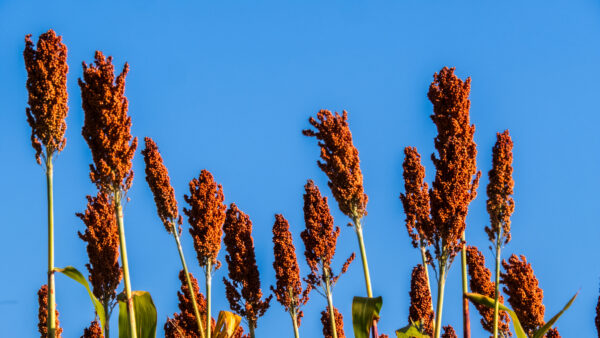
Fans will see players, goals and championship moments at the 2026 FIFA World Cup. They probably won’t think about the decades of plant breeding, research and collaboration quietly working beneath every match.
The giant pink lights illuminating AT&T Stadium at night have become something of a curiosity in North Texas.
Television stations have explained them. Drivers passing through Arlington have snapped photos. Social media users have wondered why one of the world’s most recognizable football stadiums suddenly looks like it’s growing vegetables in the middle of the night.
The answer is more interesting to seed and turfgrass professionals.
Those lights are helping sustain one of the most complicated pieces of infrastructure built specifically for the 2026 FIFA World Cup. Hidden beneath the World Cup pitch is an enormous network of plant breeders, university researchers, seed companies, sod growers, engineers, stadium operators and turf managers all working toward a singular goal.
DLF account manager for professional turf Matthew Duncan says the answer is equal parts science, logistics and collaboration. Duncan has spent years working at the intersection of turfgrass genetics and elite sports infrastructure. As preparations for the competition accelerated, he found himself helping explain a process most people never consider: how plant breeding, sod production and turf and stadium management converge beneath one of the world’s biggest sporting events.
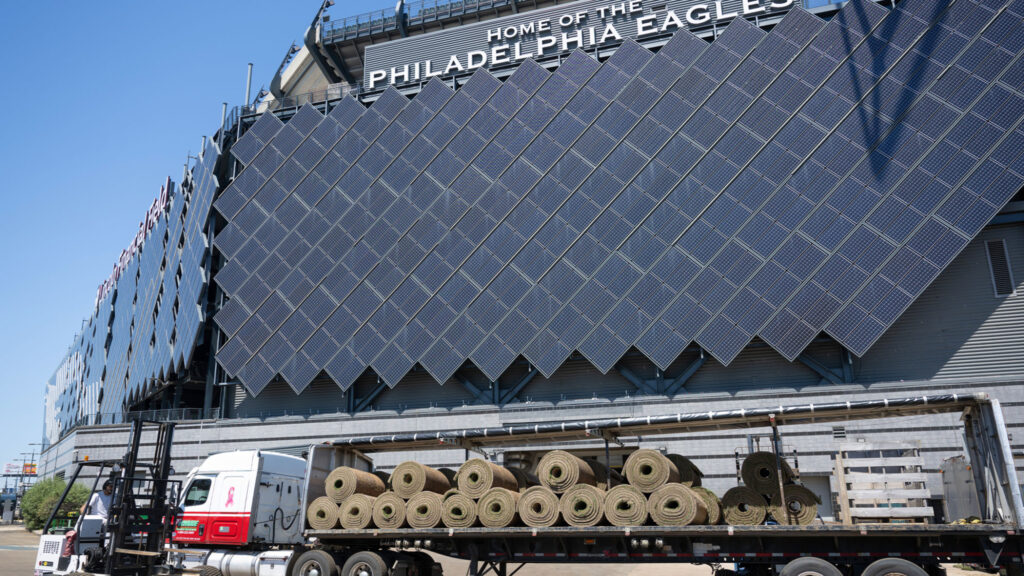
“At the end of the day, everybody would be happy if no one notices,” Duncan says. “As long as they’re seeing green grass and the field is not being an issue during these games, I think everybody can be happy.”
For all the engineering, breeding and logistics involved, that may be the most remarkable part of the story. Success isn’t measured by visibility. It’s sort of measured by invisibility.
Fans will watch players, coaches and scoreboards. They’ll celebrate goals and debate officiating calls. Few will stop to think about the grass beneath every pass, sprint and game-winning shot. Yet every one of those moments depends on years of scientific work that started long before a single piece of sod entered a stadium.
The tournament spans 16 cities across the United States, Canada and Mexico. Each location presents its own environmental puzzle. Indoor stadiums in Texas require different solutions than outdoor venues in Canada. Mexico City’s elevation creates challenges entirely its own. Researchers have spent years studying sunlight exposure, temperatures, drainage systems and player demands, all while trying to answer a deceptively simple question.
How do you build a world-class soccer pitch everywhere at once?
Soccer calls it a pitch, but for plant breeders and turf scientists, it’s one of the most complex agricultural systems many consumers will ever unknowingly experience.
Ten Years of Breeding for 90 Minutes of Play
Unlike most people, Stacy Bonos thinks about grass all the time.
“Unfortunately,” she says with a laugh.
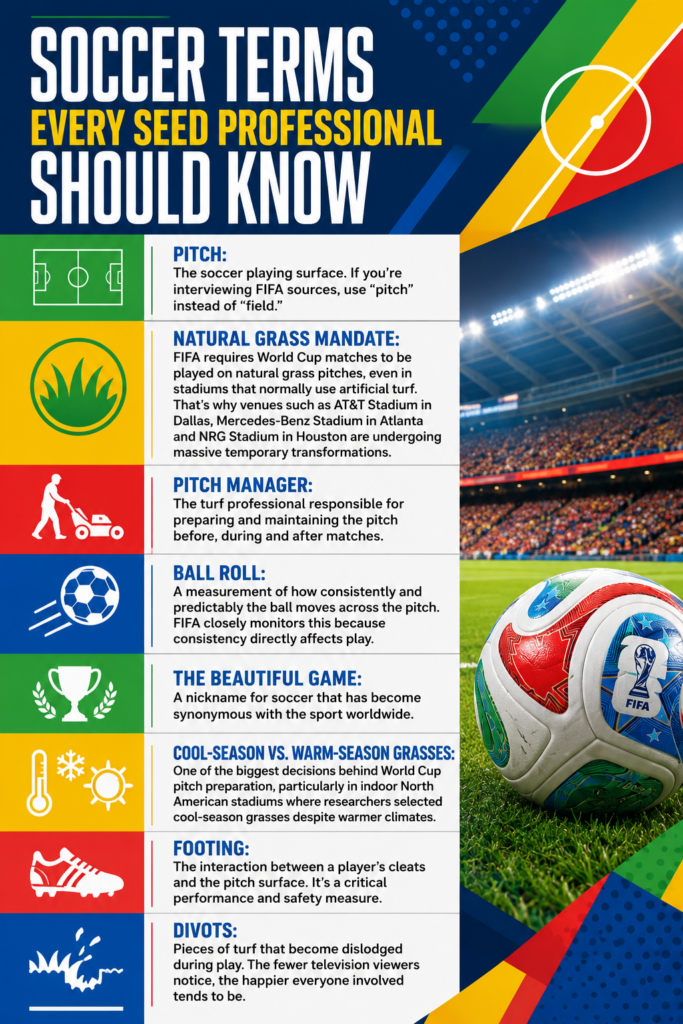
Bonos, a turfgrass breeder at Rutgers University, sees soccer matches differently than the rest of us. While billions of viewers focus on athletes, she’s evaluating the pitch itself.
“I’m looking at how uniform the field looks,” she says. “Are there patches where it’s worn from the play? Are there patches where it’s yellow? Are chunks of grass flying up when the athletes go to turn?” she says.
It’s an occupational hazard, but it’s also a reminder that the pitch is far from an afterthought. Elite sports have become increasingly dependent on sophisticated breeding programs designed to produce grasses that can withstand immense physical stress while maintaining consistency, aesthetics and player safety.
Bonos knows exactly how difficult that challenge is because her team at Rutgers has played a role in preparing 10 of the 16 World Cup venues, including Dallas, Houston, Seattle, Los Angeles, Atlanta, Philadelphia, Boston, Vancouver, Toronto and Mexico City.
That list alone hints at the complexity of the assignment. One variety can’t simply be planted everywhere and expected to thrive. Different climates demand different solutions. Indoor stadiums require entirely different management strategies than outdoor facilities. Some environments challenge grasses with excessive heat while others battle humidity, cloud cover or limited sunlight.
The complexity grows exponentially when you realize the work doesn’t begin months before the tournament. It begins years before anyone ever enters a stadium.
“It takes probably close to 10 years to really get something,” Bonos says.
That’s a timeline agriculture understands but one that may surprise sports fans accustomed to seeing a pitch installed over a few days. In reality, what are watching is the culmination of thousands of tiny decisions made over the course of a decade.
Breeders make crosses, evaluate offspring and repeat the process year after year, searching for the right combination of traits. Those traits don’t look much different from the challenges agriculture is solving everywhere else. Turfgrass breeders pursue disease resistance, drought tolerance and resilience just like row crop breeders do. The difference is that they must also account for athletes wearing cleats and changing direction at full speed.
“We evaluate the grasses for all these different stresses,” Bonos says. “We have a wear simulator that simulates soccer cleats. We use rainout shelters for drought screening. We study heat tolerance and we’ve got a very active disease tolerance screening.”
At Rutgers, the numbers are staggering.
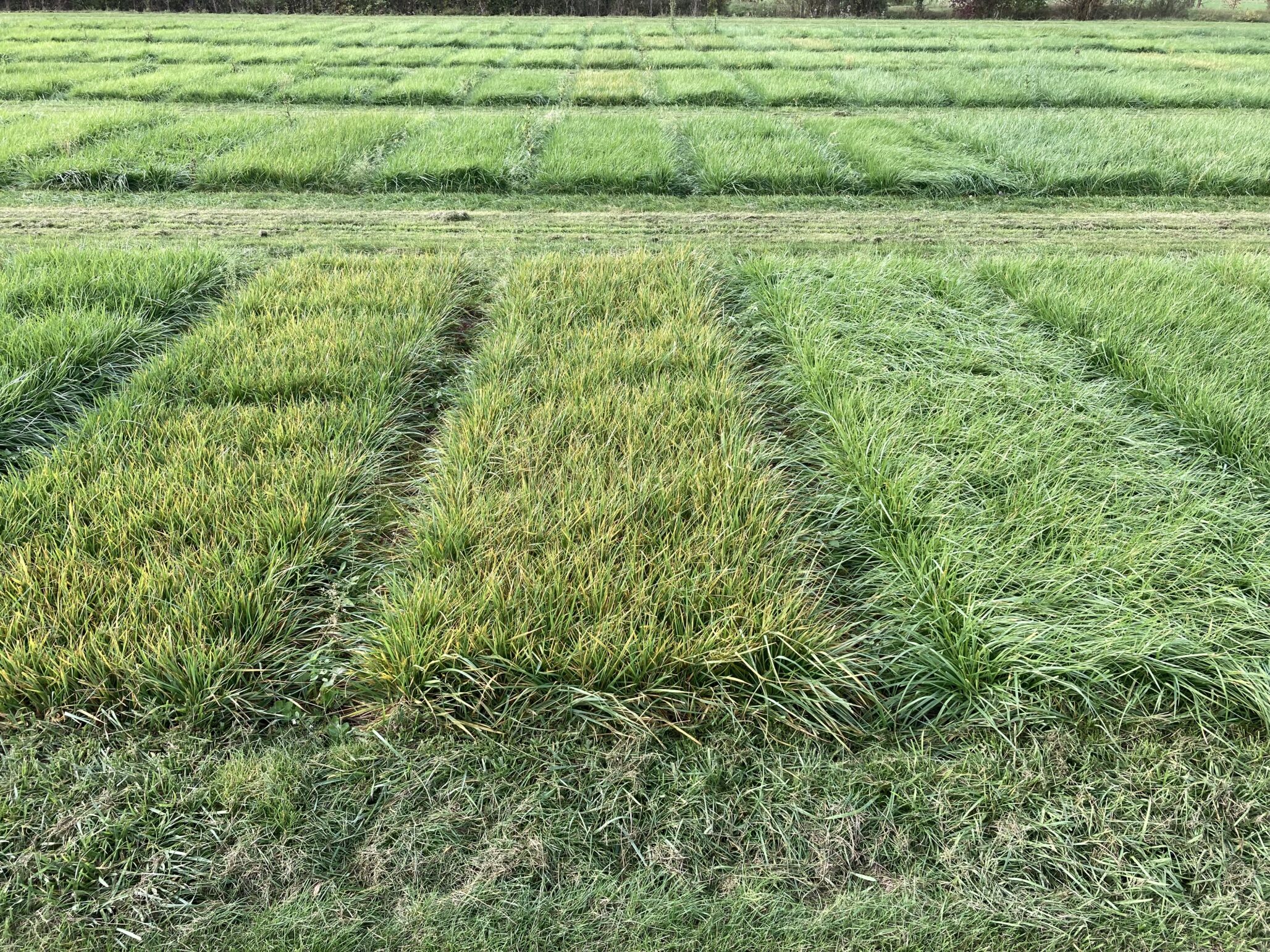
Her team evaluates 51,000 turf plots every month and hundreds of thousands of individual plants used for seed production and breeding. Each plot measures just three feet by five feet, creating an enormous outdoor laboratory where researchers can compare performance under identical conditions.
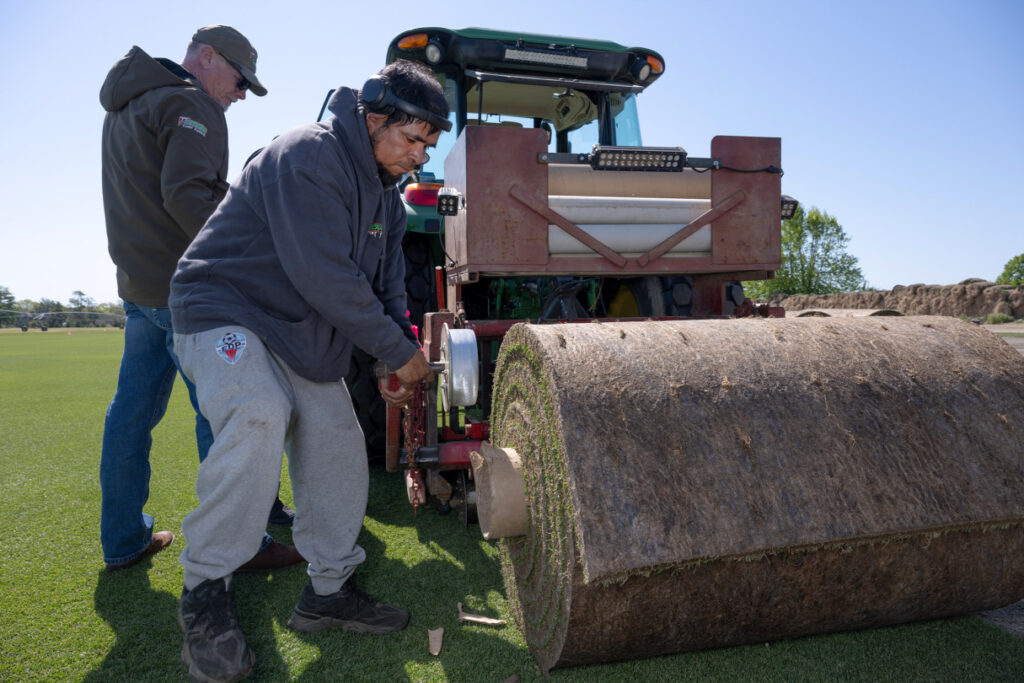
Some of the most valuable insights come from a machine developed decades ago by one of her predecessors. The wear simulator repeatedly moves across research plots, allowing breeders to recreate the punishment a pitch receives during competition.
Researchers can even calibrate it.
“One or two passes equals one soccer game,” Bonos says.
The visual results can be dramatic. Some grasses wear completely down to the soil while others remain remarkably intact. Those surviving plants become candidates for future crosses, concentrating the traits that breeders are trying to strengthen.
The process may seem painstakingly slow, but that’s often the nature of innovation in agriculture. Progress is built one season at a time, one crossing at a time and one generation at a time. The World Cup simply compresses decades of that work into a single moment the entire world gets to see.
Teaching Grass to Think It’s Outside
As complicated as breeding becomes, the challenges don’t stop once the seed leaves a breeding program.
In some ways, that’s when the real puzzle begins.
Dallas may be the best example. Under normal circumstances, a Texas stadium would rely on warm-season grasses that thrive in heat. The problem is that AT&T (Dallas) Stadium isn’t functioning as a normal environment during the World Cup.
It’s functioning as a carefully managed ecosystem.
“Places that might normally have warm season grass, like Dallas or Houston or Atlanta, are all going to have cool season grasses inside the stadium because the warm season grasses need quite a bit more light,” Duncan says.
The pink lights hanging from the ceiling have become the public face of that effort, but they’re only one piece of an extensive system. Ventilation systems sit underneath the pitch. Drainage systems have been upgraded. Stadium managers constantly monitor conditions that most people never think about.
“They have to trick it with lights to think that it’s outside and try to keep it alive completely indoors,” Duncan says.
That sentence sounds simple enough until you stop and think about what it actually means.
One of the world’s largest entertainment venues has essentially become a giant controlled growing environment dedicated to maintaining an elite soccer pitch.
The complexity extends far beyond Texas. Mexico City required an entirely different strategy because of its elevation. Indoor venues across North America each require unique management plans. Researchers have spent years determining not only which grasses perform best but where they perform best.
The result is an agricultural puzzle spread across an entire continent.
What the World Cup Says About the Modern Seed Sector
Perhaps the biggest lesson from the World Cup is that no single organization can pull something like this off alone.
Universities, seed companies, sod producers, researchers and stadium managers have all contributed to the effort. It looks remarkably similar to how modern agriculture already functions.
Bonos describes her role as one piece of a much larger machine.
“We work with about 20 to 25 different companies, and we work closely with them to develop varieties and market them,” she says. “We do the initial breeding of the varieties, and then we work with the company to commercialize them so that they can be sold.”
That collaboration may be one of the most important takeaways for readers. The World Cup isn’t the result of one company, one breeder or one university. It’s the product of multiple disciplines working together over many years.
Technology will likely accelerate that collaboration even further.
Bonos sees enormous potential in genomics, predictive breeding and advanced analytics, particularly for traits that have historically been difficult to improve.
“If we had the ability to predict certain stresses before they happen, or what the tolerance level of those plants would be under that stress, it would save months, if not years,” she says.
She doesn’t see technology replacing breeders. She sees it making breeding programs more efficient and more responsive to future challenges.
The future isn’t about replacing expertise. It’s about amplifying it.
Consumers rarely think about agriculture until something goes wrong. The World Cup offers a different opportunity. For a few weeks, billions of people will unknowingly witness decades of plant breeding, years of research and countless collaborations playing out beneath every match.
And if nobody notices any of it, everyone involved will have succeeded.