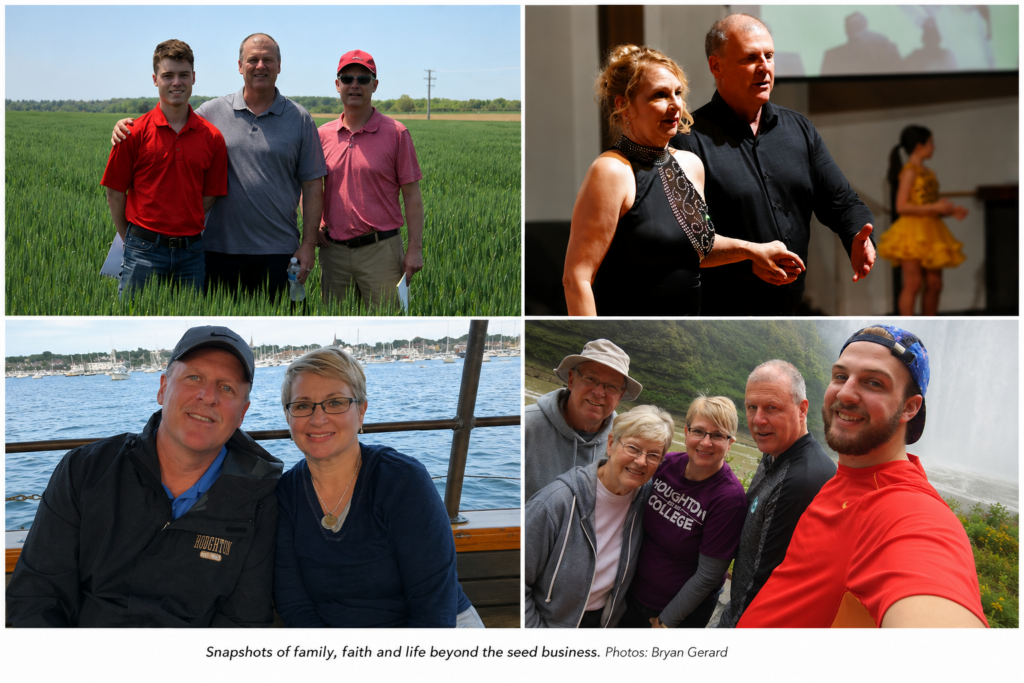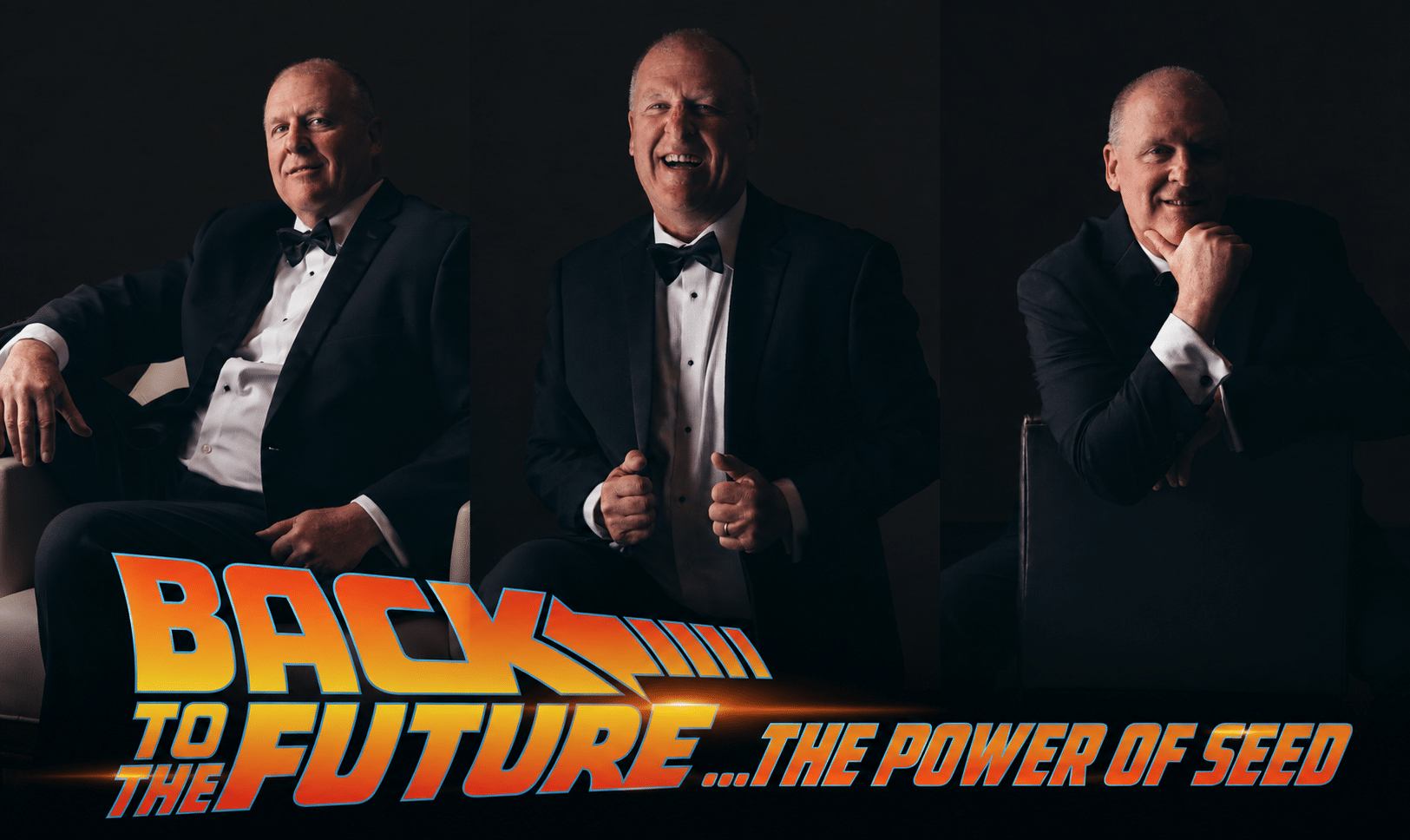
ASTA Chair Bryan Gerard draws on family legacy, entrepreneurial energy and a conviction that the power of seed sits at the center of food security, innovation and agriculture’s future.
Bryan Gerard grew up watching seed shape his family’s life.
Long before he became chair of the American Seed Trade Association (ASTA), long before he logged decades of committee service and international leadership, seed was simply part of everyday conversation at home.
His father, John Gerard, started as an FFA agriculture teacher in a small Indiana town. He later founded a private soybean company, served as general manager of the Indiana Crop Improvement Association and in 1984 launched JGL Inc., a soybean and wheat licensing company that became the foundation of the family business.
Bryan and his brother Greg eventually joined the company and helped expand what their parents had built. After the family sold JGL in 2012, John Gerard did something few entrepreneurs would attempt after decades in business: he started over.
They named the new company JoMar Seeds.
“JoMar stands for John and Marta,” Gerard says, referring to his mother and father.
Today, the company is moving into its third generation. Greg’s son John is part of the business, and Bryan’s youngest son Adam has joined as well.
For Gerard, joining the family business became more than a career decision. It also gave him a profound appreciation for the central role seed plays in modern life.
“If you look at the seed industry, food, feed, fuel, fiber, a significant part of reclamation and part of climate, there’s not much that doesn’t start around the seed,” he says.
Seed is Where Everything Begins
JoMar Seeds occupies a critical position in the seed value chain.
The company does not breed wheat varieties. Instead, it represents breeding programs and licenses their genetics to seed companies of every size, from multinational corporations to small independent businesses serving only a few counties.
“If you have a seed brand, you can be a JoMar customer,” Gerard says.
That work gives Gerard a front-row seat to the movement of innovation from breeder to seed company to farmer and ultimately to consumers.
“There is something that is phenomenal in that,” he says. “Tto know that the work we’re putting in, the amount of hours we’re doing, we’re looking for better products for seed companies to eventually then lead to the growers, which then gets to the consumer. That is phenomenal.”
Gerard doesn’t use words like “feeding the world” lightly, but he believes deeply in the purpose behind the industry’s work.
“To be engaged in feeding the world is something that I know sounds altruistic, but the reality is there is something phenomenal in knowing that the work we’re putting in eventually gets to the consumer.”
To him, seed is not merely the first input in agriculture. It is the starting point for solving some of the world’s biggest challenges.
Thirty Years in Seed; One Defining Year
Gerard’s path to the ASTA chairmanship began long before he officially entered the leadership chain.
He first attended industry meetings as part of Junior Seedsmen programs. His formal leadership journey started in the early 1990s and accelerated in 1998 when his father was asked to represent ASTA at the International Seed Federation for cereal crops.
John Gerard declined and pushed forward Bryan instead. That recommendation opened a door that would shape Bryan Gerard’s career for decades.
He represented the cereal crop sector internationally for 19 years, served two terms on the International Seed Federation board and held multiple positions on ASTA’s executive committee and board.
“My first role on the (ASTA) executive committee was from 1999 to 2009, and then I stepped back onto the executive committee around 2019 or 2020 and have been on it since,” he explains. “I’ve served in different committee leadership roles and on the board in the in-between time.”
Now, after more than three decades of service, Gerard assumes the chairmanship at a time when the seed industry faces a lot of uncertainty.
Trade disputes continue to reshape global markets. Regulatory questions grow more complex. State legislatures are increasingly active. Federal farm policy remains unresolved.
Gerard sees those realities clearly, but he does not view them as reasons for retreat.
“Challenges have always been with us,” he says. “Challenges bring opportunities. Business leaders see them in a positive way. They find their path forward.”
His prescription is straightforward.
“I think we have to stay calm and just drive those opportunities.”
Innovation Never Stops Setting the Table
Every ASTA chair enters office with a theme. Gerard’s is both nostalgic and ambitious.
Back to the Future.
“I look at how entrepreneurial ASTA has been over the years, and how engaged ASTA has been over the years, and how energetic in that engagement,” he says. “I see great opportunity for us going forward to tap into those energies and those traits from the past.”
The phrase is not about turning back the clock. It is about reclaiming the entrepreneurial spirit that has long defined both ASTA and the seed industry.
For Gerard, innovation remains the industry’s most powerful tool.
“The most important thing that we can learn is that innovation provides solutions and sets the table for the next menu of solutions that will be needed,” he says.
In other words, each breakthrough does more than solve today’s problems. It creates the foundation for addressing emerging and future challenges. He says that same logic applies to food security.
“If you think about the ability to feed your country, and then also to be able to provide food security to other countries, I think it brings stabilization to communities and to countries and cultures,” he says.
Gerard believes the seed industry’s work reaches far beyond the farm gate. The ability to improve seed means the ability to strengthen agriculture, support communities and create greater stability around the world.
The Gatekeeper Mindset
One of the defining milestones of Gerard’s year as chair will be the rollout of ASTA’s new strategic plan.
The process is intentionally designed to draw in broad member participation. Interviews are already underway, and ASTA leaders will devote substantial time during the leadership conference in Milwaukee to gathering input.
“Whoever shows up is going to get a seat around the table and be able to have a voice,” Gerard says.
He wants the final plan to reflect the full diversity of the seed industry.
“We represent all the different crops and we represent all the different types of companies,” he says. “A strategic plan has to be something that continues to allow that entire industry to flourish.”
Gerard also intends to strengthen ASTA’s advocacy efforts, particularly at the state level where policy proposals increasingly affect seed businesses.
“We are phenomenal at the federal level, recognized as the voice of the seed industry,” he says. “Elected officials know who we are. Regulators know who we are.”
Building that same recognition and influence in state capitals, he says, represents one of the organization’s biggest opportunities.
Gerard uses an unusual word to describe his role as chair.
Gatekeeper.
He doesn’t mean someone who closes doors, rather someone who keeps them open.
“For this one year, I want to be a gatekeeper that allows the industry to flourish and to find solutions to the challenges that set the table for our industry to really bring value to a person’s life,” he says.
The term captures his approach to leadership. He doesn’t speak about imposing a personal agenda. Instead, he talks about creating the conditions for others to succeed.
“We have a phenomenally gifted board and a phenomenally gifted, talented staff,” he says.
His responsibility, as he sees it, is to make sure they feel empowered and have the tools they need to perform at the highest level.
Family, Faith and Ballroom Dancing
Away from the office, Gerard centers his life around on family.
He and his wife Robin celebrate 42 years of marriage this year . After spending most of their lives in Indiana, they moved to the Nashville area shortly before COVID to be closer to their son, daughter-in-law and grandchildren.
Gerard also enjoys kayaking, fishing, church and community involvement. One hobby often catches people by surprise.
“Ballroom dancing is something that my wife and I really enjoy,” he says. “I really enjoy the competitive part of it.”
The comment feels fitting. Whether he is dancing, leading a business or guiding a trade association, Gerard appears most energized when movement is purposeful and partners are working in step.
As he begins his year as ASTA chair, Gerard brings the perspective of a family businessman, the discipline of a longtime volunteer and the optimism of an entrepreneur who sees possibility in every challenge.
His theme may be Back to the Future. But his message to the seed industry is unmistakably current. Stay calm. Stay engaged. Keep innovating.
Because, as Gerard puts it, “There’s not much that doesn’t start around the seed.”