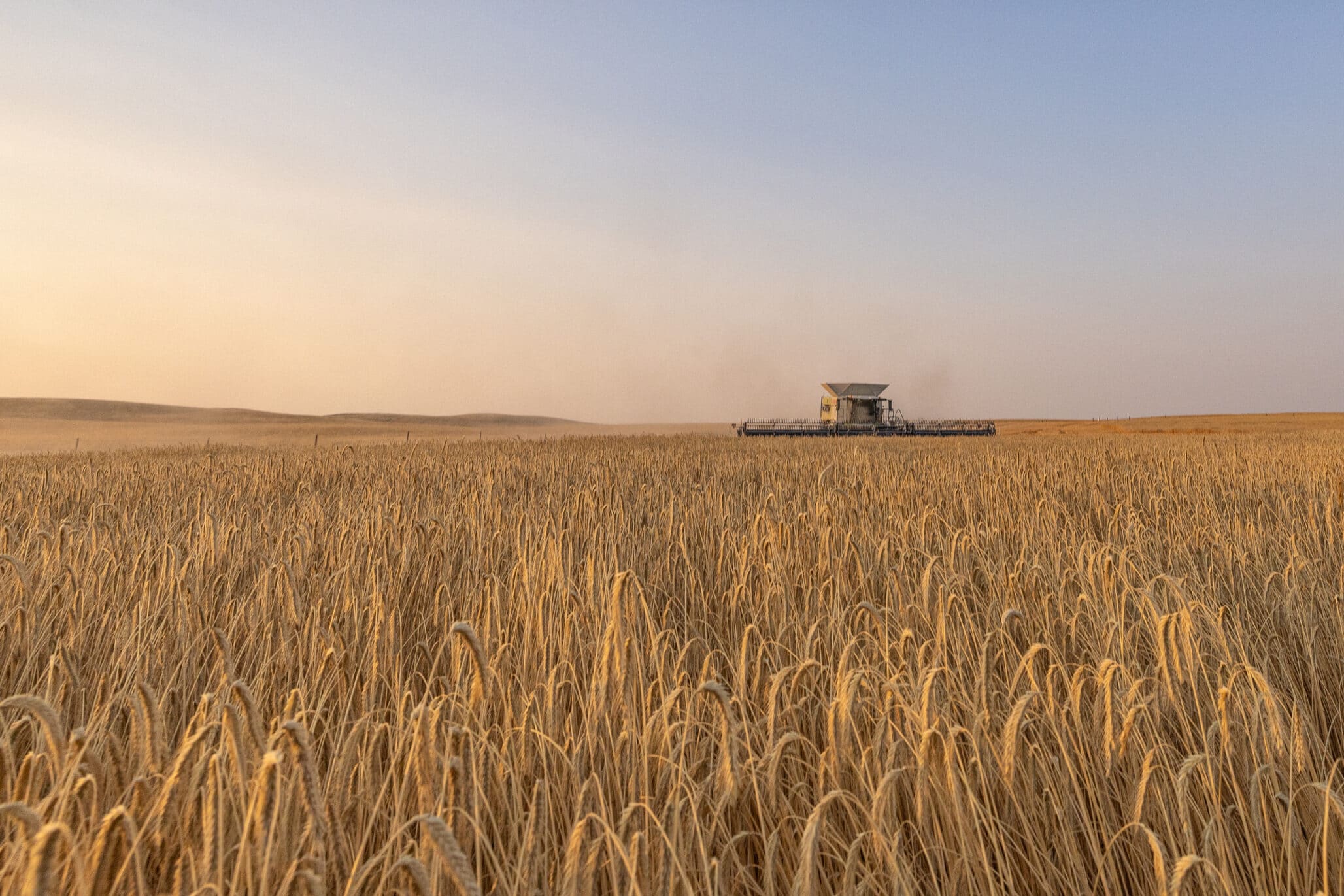
How KWS applies generations of breeding discipline to today’s challenges and opportunities in North American agriculture.
Plant breeding unfolds over seasons, decades and, in some cases, generations. At KWS, the timeline stretches back 170 years. From the beginning, the company had a clear focus on seed and breeding. Scientific excellence, long-term thinkig anc closer farmer collaboration still drives the company. This perspective continues to influence how KWS approaches research, innovation and market development today — including in North America.
From Sugar Production to a Leader in Plant Breeding

The KWS story begins with entrepreneurial German farmer Matthias Christian Rabbethge. He recognized the potential of the emerging beet sugar industry. In 1856, he acquired a majority stake in a sugar beet factory in the small town of Klein Wanzleben. That laid the foundation for what would later become KWS. As plant breeding gradually became its core business, KWS expanded across crops and regions. They moved beyond sugar beet into cereals, corn, oilseeds and vegetables. Today, the company runs breeding programs in more than 20 crops and operates commercially in over 70 countries. Within this global footprint, North America is an important and growing market.
North America: A Chapter Shaped by LongTerm Thinking
While sugar beet continues to play a central role in the North American business, KWS is increasingly applying its breeding capabilities to additional crops. One prominent example is hybrid rye.
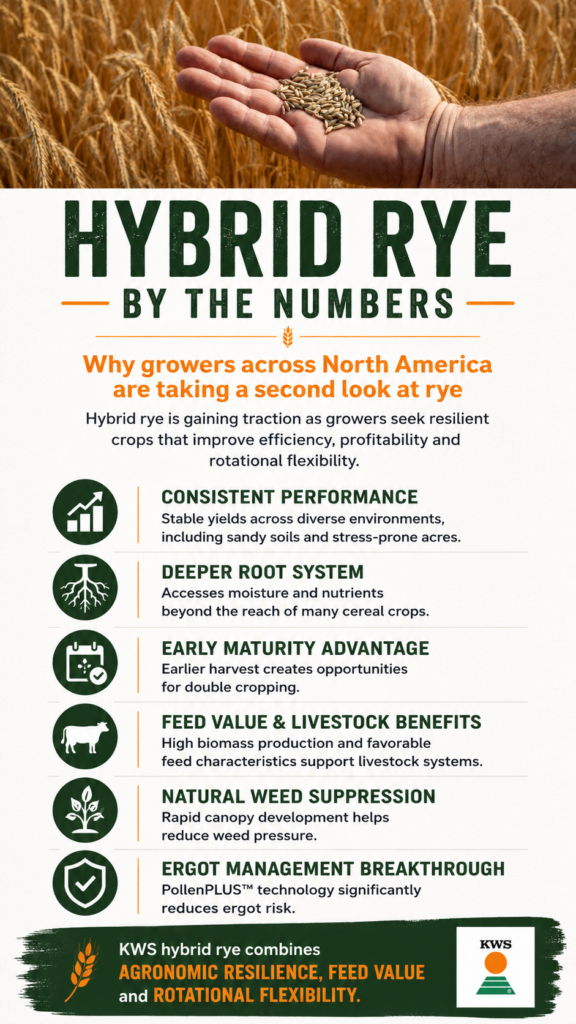
Once considered a niche option, hybrid rye is now gaining recognition as a practical solution to multiple on-farm challenges. Growers are seeing consistent performance across a wide range of conditions, especially in environments where other crops struggle.
“Hybrid rye performs across a wide range of conditions because of its resilience.” KWS Seeds Canada sales and marketing manager Cole Ambrock says. “It produces a crop where others aren’t able to and on top of that, you’re seeing strong yield performance and feed value.”
That resilience is tied to the plant itself. Hybrid rye develops a deeper, more extensive root system, allowing it to access nutrients and moisture that other crops may not reach.
Innovation in Practice: Solving Old Problems with New Genetics
The foresight that has shaped KWS’s path to a leading plant breeding company continues to guide the company today. In recent years, KWS has consistently reinvested around 20% of its net sales into research and development, addressing longstanding and emerging challenges.
In North America, one factor has historically limited the use of rye: ergot. KWS addressed the challenge through breeding, not chemistry.
Their PollenPLUS™ technology increases pollen production during flowering, helping plants outcompete ergot infection during a critical window. The result is significantly reduced risk and renewed confidence in rye as a feed ingredient.
“Older generations of farmers moved away from rye because of ergot,” Ambrock says. “Now we can say it’s manageable.”
This approach — solving problems at the genetic level — reflects a broader philosophy within KWS.
“We start with the seed and work outward,” Ambrock says. “The goal is to make crops more resilient so farmers don’t have to rely as heavily on additional inputs.”
Building Research Capacity

In hybrid rye, long-term growth is supported by dedicated expertise. Across the U.S. and Canada, specialized teams work on the crop alongside agronomy and animal nutrition specialists.
“We’re investing in research to understand how rye performs in feed rations and how it can be used more effectively,” KWS country manager U.S. Becca Brattain says. “At the same time, we’re looking at how to improve the plant itself.”
To support this work, KWS has added a forage breeder focused specifically on hybrid rye, with the goal of expanding its role in livestock systems.
Family Ownership and Long-Term Focus
The strategic patience that shapes how KWS pursues its long-term goals is closely tied to KWS’s ownership structure. As an independent family company led by the founding family in its seventh generation, KWS continues a long-standing planning tradition that extends well beyond shortterm market cycles.
KWS’s work in North America closely connects to its global breeding network. Hybrid rye varieties developed and refined in Europe provide a foundation, but the focus is increasingly on tailoring genetics to North American environments. That work draws on global germplasm, research infrastructure and decades of breeding expertise.
In that sense, the North American business operates with a dual identity — combining entrepreneurial momentum with the backing of an established organization.
“We’re building something here, but we’re not starting from scratch,” Brattain says. “We have access to a huge amount of knowledge and experience.”
From climate variability to input costs and shifting market demands, growers are under increasing pressure to adapt. In that environment, crop diversity and resilience are becoming more important.
“I see KWS as a catalyst for diversification,” she says. “We’re bringing varieties that can help solve problems farmers are facing and fit into rotations where traditional crops may not be enough.”
Plant breeding may not move at the pace of other industries, but its impact is long-lasting. In North America, KWS shapes its work from a 170‑year breeding mindset — translating foresight, reliability and independent decision‑making into tangible results in the field.
Investing for the long term: KWS operates regionally focused breeding stations in Illinois, Idaho and Minnesota, alongside the Gateway Research Center in St. Louis, Missouri. Recent investments include a new greenhouse facility in Kimberly, Idaho.