USDA Under Secretary Scott Hutchins says the future of agriculture will depend on breeding innovations that extend beyond the farm gate to include consumers and human health.
Plant breeders are accustomed to thinking years ahead. They anticipate a new disease pressure, an invasive insect pest, a changing market. They also think about traits that farmers may need long before they realize they need it.
But according to USDA Under Secretary for Research, Education and Economics Scott Hutchins, the next challenge may be even bigger.
Plant breeders may need to expand how they think about their role in agriculture itself.
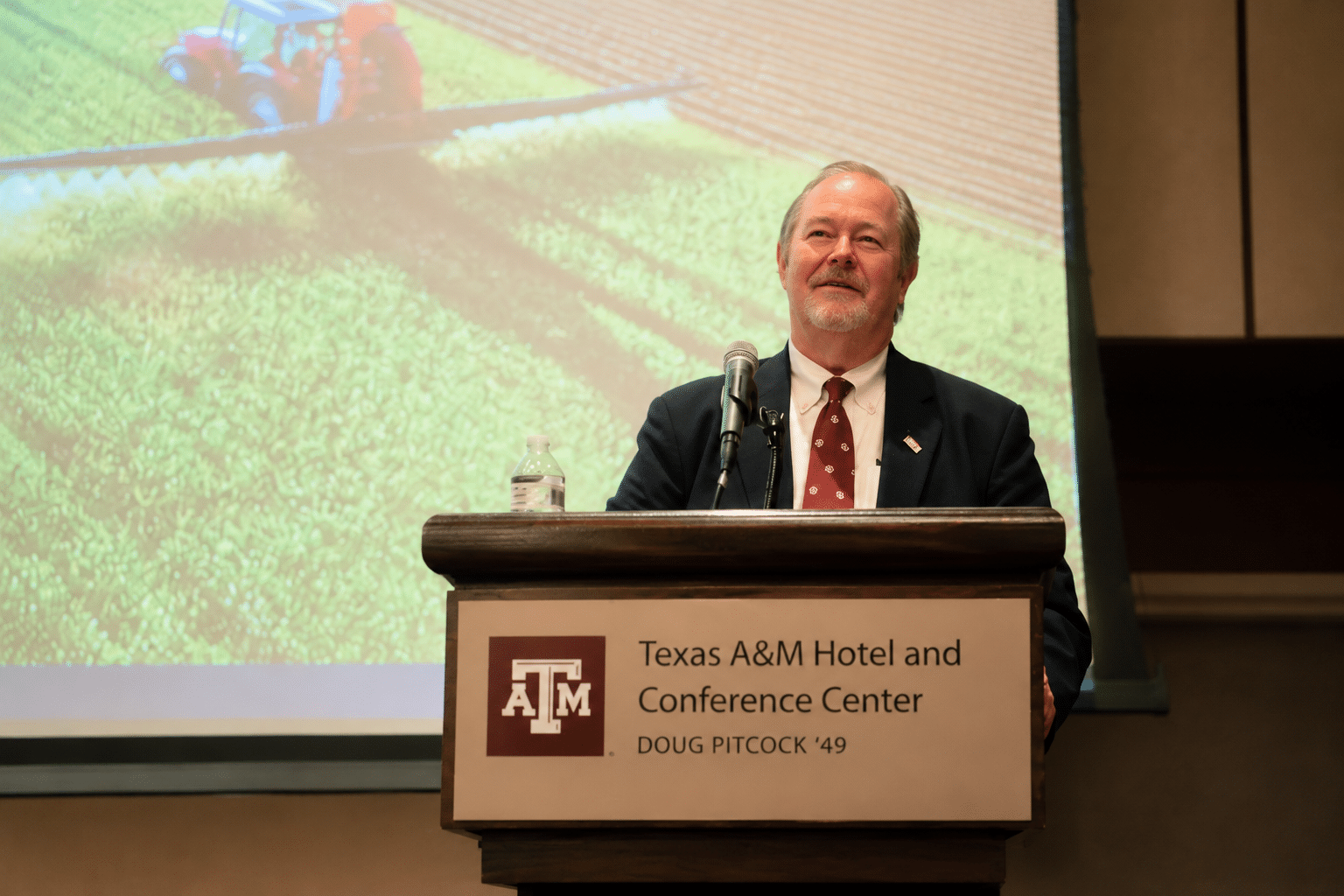
Speaking to attendees at the National Association of Plant Breeders meeting at Texas A&M University, Hutchins connected some of USDA’s biggest priorities — farmer profitability, human health, food security and farm resilience — directly to the work happening inside modern breeding programs.
The message wasn’t that breeders need to abandon traditional priorities like yield, agronomic performance and disease resistance. It was quite the opposite.
Hutchins suggested the industry is entering an era where plant breeding will increasingly influence challenges that stretch far beyond the lab and the field.
“We’ve been extremely efficient because of the innovations, because of the continuous investment and success of plant breeding and other sciences,” Hutchins says.
He pointed to a century of agricultural productivity gains as evidence that innovation has already transformed society in ways many people no longer recognize.
“It’s our success in agriculture that has enabled all of the other success that we enjoy, whether it’s space travel or whether it’s computing power or whatever it might be,” he says. “We have been able to do that because we’ve been able to release much of our population from an agrarian society … and allowed people to work on other things and make other developments.”
He says the question now is what the next chapter looks like. Then, he repeatedly came back to a familiar audience: the plant breeders in the room.
Consumers Move Closer to the Beginning of the Plant Breeding Process
One of the most notable shifts Hutchins mentioned was a call for breeders to think further downstream.
Historically, many breeding programs have focused on helping farmers become more productive and profitable. Those priorities remain unchanged, he says, but consumers may need a seat at the table earlier than they have in the past.
“We need to begin to think strategically and put the consumer at the front of our breeding goals, and not to the detriment of the producers and growers, but we need to think about the consumers,” he said.
That shift aligns with USDA’s growing emphasis on nutrition, food quality and human health.
Hutchins says agriculture has an opportunity to intentionally improve the food supply itself by increasing nutritional value, enhancing consumer appeal and making healthier choices easier.
“We have to find a way to put it in a context that consumers can appreciate and consumers can understand,” he says.
He also challenges researchers to think beyond educational campaigns and to focus on creating products people naturally gravitate toward.
“I’m thinking about the seedless blackberry,” Hutchins says. “Forget the nutrition side of it as the sole focus. Just make things they should eat more attractive to eat or more appealing to eat.”
The comments reflect a broader evolution happening across agriculture. Increasingly, conversations about breeding aren’t ending with farmers. They’re extending all the way to grocery carts and dinner plates.
USDA Is Looking to Plant Breeders for Inspiration
Hutchins explains USDA is adopting a philosophy it borrowed directly from plant breeders.
Across hundreds of research programs, USDA is implementing what he calls “discovery goals” — measurable outcomes that define what success looks like before research even begins.
The inspiration came from years of working alongside breeders.
“I’ve never talked to a breeder in my career, in the private sector or the public sector, that if I said, ‘what are your breeding goals?’ they couldn’t tell me what those breeding goals are,” he says. “I’m just telling you, not every research culture works that way.”
He believes that mindset can strengthen public research across USDA. Rather than just asking scientists what they are studying, Hutchins wants them to identify the value their work will ultimately create and who will benefit from it.
A New Conversation Around Seed Sovereignty
Another concept gaining momentum inside USDA is seed sovereignty. Hutchins says the department is investing in strengthening domestic capabilities surrounding seed resources as part of a broader farm security strategy.
The effort includes modernizing the National Plant Germplasm System, sequencing collections and connecting those resources with emerging artificial intelligence systems.
“We think we have a susceptibility with seeds and seed sovereignty,” he said.
At the same time, he emphasizes that the initiative is not about isolating the United States from international partnerships.
“We just want to make sure that we have our own capabilities to develop that,” he says.
For many plant breeders, the National Plant Germplasm System is already an indispensable tool. Hutchins suggests it may soon grow even more important and says “we have a tremendous resource and we need to treat it like a tremendous resource.”
Hutchins points to an expanding vision for plant breeding.The work itself still begins with seeds, genetics and years of patient fieldwork. But the outcomes USDA is asking breeders to influence are becoming broader.
Farmer profitability remains essential. But now consumers, human health and farm resilience are entering the conversation earlier, too.
For a profession accustomed to thinking years ahead, Hutchins’ message was clear: the future of plant breeding may be bigger than the field itself.