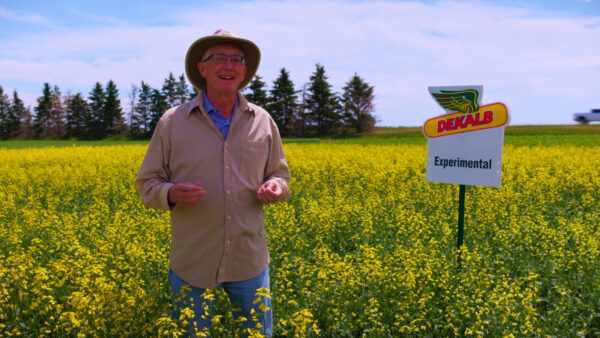
Istvan Rajcan might be Canada’s most decorated soybean breeder. In 28 and a half years at the University of Guelph he has developed 87 cultivars, published 140 refereed papers and trained 51 graduate students, a run the National Association for Plant Breeding recognized last year with its Public Sector Impact Award. All of it was built inside the public-private plant breeding funding model he now says Canada needs to protect.
Ask him his favourite part of the job, though, and he doesn’t mention a single variety.
“Often they come in after completing their undergrad degrees with little experience and little confidence,” he says of his graduate students. “To see them grow, learn new skills and become confident and independent is probably the best part of my job.”
Keep that answer in mind, because it changes how you hear everything else he says. A breeding program produces two things: varieties, and the people who make them. Rajcan leads with the one nobody counts.
The Cuts He Won’t Name
“So I would say it is true that Canada is at a crossroads,” he says. “There have been some recent cuts from the government to plant breeding programs or facilities that support plant breeding. I’m definitely concerned about that.”
He doesn’t say which government or which facilities. He doesn’t really need to. The federal research cuts are the ones the whole sector has spent 2026 talking about: the 2025 Comprehensive Expenditure Review set a 15 per cent reduction to Agriculture and Agri-Food Canada’s budget between 2026 and 2029, including a $112-million cut in 2026-27, as François Eudes of AAFC discussed on this series in July. In March, farm organizations from across the country wrote to the agriculture minister opposing the closure of AAFC research facilities in six provinces, Ontario among them.
A Longer Cheque, Not a Bigger One
Given all that, you would expect a public breeder’s ask to be simple: more money. Rajcan’s prescription is one sentence long, and it isn’t that. “Plant breeding funding formula has to be a long-term one,” he says.
The formula in question is the matching one. “We received funding from private seed companies and we are able to match it from the provincial or federal government,” he says, “to multiply the value of the dollar and make the program more effective.”
That is how much of Canadian public plant breeding works now. Under Growing Forward and the Sustainable Canadian Agricultural Partnership, public research money has increasingly required matching dollars from industry or producer groups. It works well for a crop like soybeans, with big acreage and private money in the room. It is a much harder ask for crops with thin margins or small acreage. In Ontario, the biggest single instrument is the Ontario Agri-Food Innovation Alliance, the $343-million, five-year agreement between the provincial agriculture ministry, the University of Guelph and the Agricultural Research Institute of Ontario. Rajcan doesn’t name it, but it is the backbone of research funding at his institution, and it illustrates his point either way: the money runs on a fixed term.
And the term is the whole argument. Breeding doesn’t have an off switch; it has a decay curve. “We’re constantly facing different challenges in developing new traits and new varieties,” he says. “And if that’s not happening, those same old varieties would become less and less productive until they become unprofitable.” It is the same clock that drives the debate over royalty and value creation models in Canadian cereals, arriving from a different direction.
The Americans Are Surprised It Works
In June he took the model south, to the National Association for Plant Breeding’s annual meeting at Texas A&M University in College Station. “They are often surprised how well we collaborate with the private sector here,” he says of his American public-sector colleagues. “Many of them depend on the funding that they receive from their government, either state or federal.”
Conference conversations are not a funding study. But coming from someone who has spent nearly three decades inside the Canadian system, it is a useful outside check: the arrangement is unusual enough that the people who don’t have it notice.
Who Becomes a Plant Breeder Has Changed
For the first decade or so of his career, most of Rajcan’s graduate students came from farms. Later that changed. They could be “city kids who just became excited about genetics” and saw what new varieties could do for a whole society. He calls plant breeding a career of the future, and the shift matters more than it sounds: the talent pipeline no longer depends on the shrinking share of Canadians who grew up on a farm. It is the same structural question Paul Sullivan raised from the agronomy side in June, asked about people instead of plots.
Notably, Rajcan never connects the cuts to the students. He raises one concern, then the other, and leaves the wiring to the listener.
A breeding program produces two things, varieties and the people who make them. Only one of them shows up in a budget line.
Subscribe To On The Brink
On the Brink is a cross-country storytelling project about plant breeding in Canada. The goal is to spark an open, multi-perspective, ongoing conversation about what’s possible, what’s at stake, and how to seize opportunities ahead. On the Brink releases new episodes every Wednesday. Watch Episode 6 featuring Andrew Campbell and subscribe to have future episodes delivered directly to your inbox.
More Episodes
Be Part of this Conversation
We need your help to grow and evolve this conversation!
- Nominate individuals you think should be part of the On the Brink video series. Know someone who would add to the conversation? Email us at OnTheBrink@seedworldgroup.com
- Help expand the conversation by liking and sharing weekly episodes across LinkedIn, Instagram, X, and Facebook.