Modern breeding programs face growing pressure to increase yield, improve quality, reduce environmental impacts and remain globally competitive all at the same time.
Rice feeds more people than any other crop on Earth, supplying roughly one-fifth of all calories consumed globally and serving as a staple food for more than half the world’s population.
Yet breeding better rice varieties is becoming increasingly complicated.
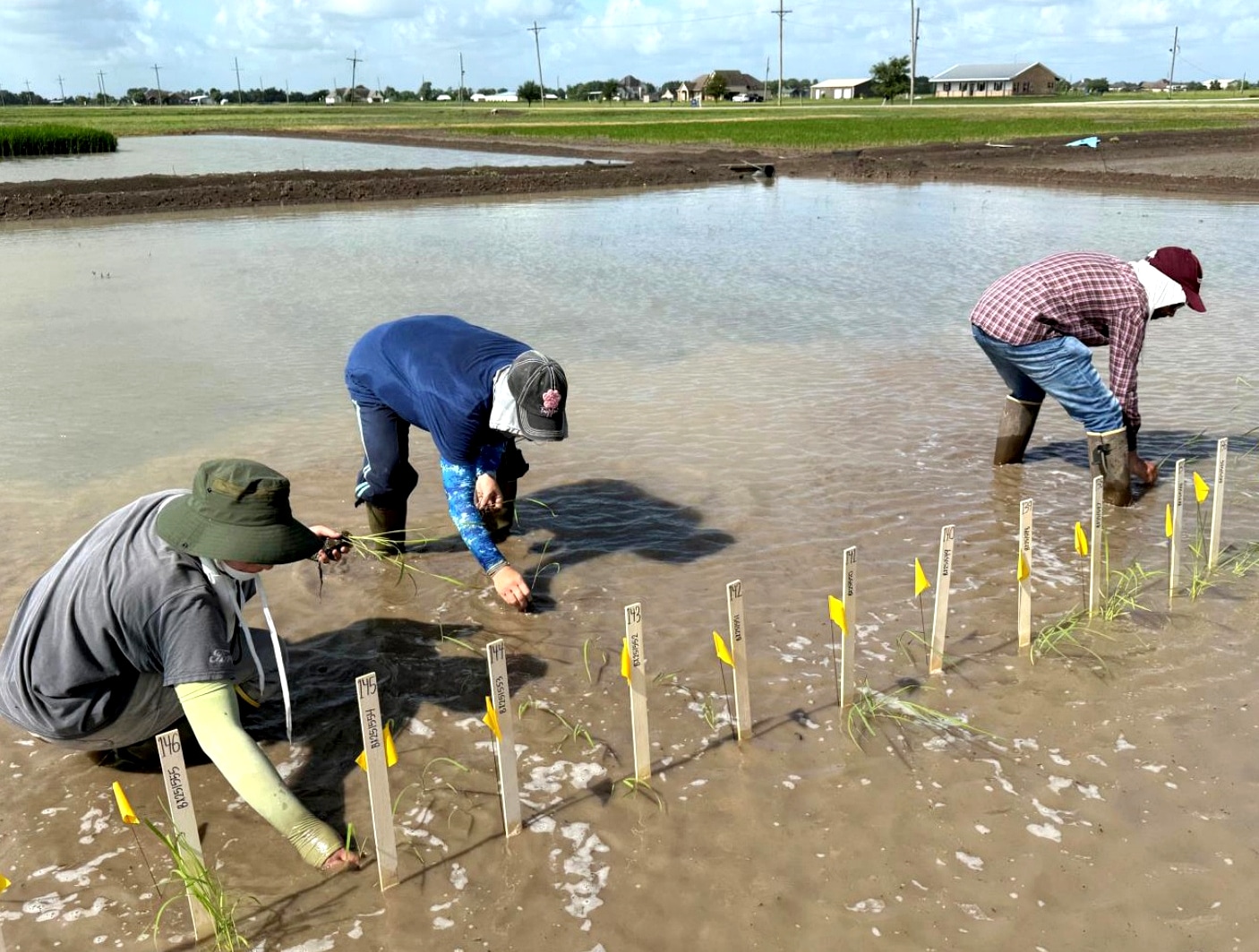
At the 2026 National Association of Plant Breeders (NAPB) annual meeting, Texas A&M rice breeder Shyamal Krishna Talukder outlined how his program is trying to tackle multiple priorities simultaneously. His team is integrating genomics, UAV phenotyping, microbiome research, genomic selection and speed breeding while pursuing an increasingly difficult goal: produce more rice with fewer resources while maintaining quality and staying competitive in a global market.
That challenge is particularly important in the United States. Although the country is not among the world’s largest rice producers, it remains a major exporter, and Talukder notes the industry annually contributes $34 billion to the U.S. economy.
The stakes are rising at a time when demand for food continues to grow.
“We are already seeing a slowdown in the growth rate of food crop production,” Talukder says.
He says the answer isn’t a single technology or breakthrough trait.
“Every time you see a jump of yield gain, that is associated with the integration of technology in the breeding program,” he says.
Yield Is No Longer the Only Measure of Success
Talukder says breeding programs can no longer focus solely on increasing production.
He says the Green Revolution relied on using more inputs to boost yields.
“Now we need to figure out how to actually stabilize or make it sustainable in terms of increasing yield gain,” he says.
His breeding program now operates around three guiding principles: increasing production, improving resource-use efficiency and reducing negative environmental impacts.
Together, those priorities become one objective: producing more output per unit of resource while minimizing environmental impacts.
For seed organizations, that evolution could reshape how breeding pipelines are built and where future investments are directed. Modern breeding programs increasingly require expertise that spans genomics, data science, microbiology, advanced phenotyping and market intelligence rather than relying solely on traditional selection methods.
That shift also means breeders may need to pay attention to traits they historically overlooked.
“We have been working on ground truth and mostly yield and yield contributing traits, but I think we need to explore secondary traits as well,” Talukder says.
Quality Is Becoming a Competitive Advantage
When Talukder arrived in Texas, one of his first priorities was understanding how the state’s breeding program compared with neighboring programs in Louisiana, Arkansas and Mississippi.
Historical data revealed a concerning trend. Texas had fallen behind some neighboring states in yield gains after 2017. At the same time, another challenge emerged.
Rice yields have increased over the past two decades while head rice percentages have declined. Twenty years ago, averages hovered around 60%. Today, they are closer to 54%.
The trend highlights a challenge many seed organizations face across crops. Improvements in one trait do not always translate into improvements everywhere else. As breeding objectives multiply, researchers are under increasing pressure to identify tradeoffs earlier in the development process.
That decline matters because the United States competes aggressively in international markets.
“The USA is a global player for world rice trade,” he says.
As global competition intensifies, Talukder says quality may deserve more attention than many breeding programs have traditionally given it.
“I will prioritize quality more than even yield at this moment because we are facing serious problems to compete with the international market,” he says.
His team recently developed a line that produces significantly higher head rice percentages, an improvement he believes could create opportunities in export markets, particularly Mexico.
“If we can increase head rice percentage by five, six or even 7%, I think buyers will be very happy. They will be ready to give us some incentives as a price,” Talukder says.
Looking Underground for the Next Breakthrough
Some of the team’s most intriguing work is happening below the soil surface.
His team began studying root hair density and length, traits that traditionally have not received much attention in breeding programs.
Researchers found significant variation among rice lines and discovered that root hair density measured in seedlings correlated with yield later in the field.
Talukder believes these types of secondary traits could help breeders address multiple challenges simultaneously.
“Root hair traits are strongly correlated with nutrient uptake efficiency,” he says. “Because root hairs play a key role in oxygen exchange in the root zone, they can also influence microbiome density.”
Those microbiome interactions may eventually improve nutrient availability while also helping reduce methane emissions in rice production systems.
What Seed Companies Can Learn From Rice
Talukder’s team is implementing genomic selection models, standardizing speed breeding protocols and incorporating UAV imagery and advanced phenotyping systems into a single breeding framework that increasingly resembles the direction many seed organizations are heading.
His team is also studying how microbiomes influence nitrogen-use efficiency and exploring how AI can improve trait prediction under low-nitrogen conditions.
“We need to explore technology,” he says. “We need to integrate technology with the breeding program, and also probably we need to explore the new traits we have been doing.”
Rice may be the crop, but the implications extend across the seed sector. As breeding objectives multiply, future success may depend less on discovering a single breakthrough trait and more on building breeding programs capable of balancing many priorities at once.