The seed industry’s next wave of innovation depends less on sequential development and more on bringing technologies together from the start.
For decades, innovation in agriculture often moved from one discipline to another in a series of handoffs. Traits moved to breeding. Breeding delivered products to the field. Crop protection addressed challenges that emerged along the way.
Amanda McClerren says that model is disappearing at Bayer Crop Science.
“We used to really think separately about traits and about seed, about germplasm. And, at some point when we developed a trait, we knew we had to hand it off to breeding, and that’s exactly what it felt like,” says McClerren, senior vice president and head of plant biotechnology. “It was a handshake.”
Today, she says, the industry’s most promising innovations increasingly emerge from the intersection of breeding, biotechnology, crop protection, data science and digital agriculture.
The shift is changing not only how new technologies are developed but also how researchers think about solving problems for growers.
When Innovation Lived in Separate Silos
McClerren has spent nearly two decades watching agricultural innovation evolve. A scientist by training, she recently returned to an R&D leadership role after serving as Bayer Crop Science CIO.
Looking back, she sees a dramatic difference between how research teams operated when she entered the industry and how they work today.
“Today we start to think differently about how do we integrate those traits into germplasm earlier,” she says. “How do we predict what traits are going to work in what germplasm? Or even, how do we design germplasm to work better with traits?”
The change extends beyond traits and breeding.
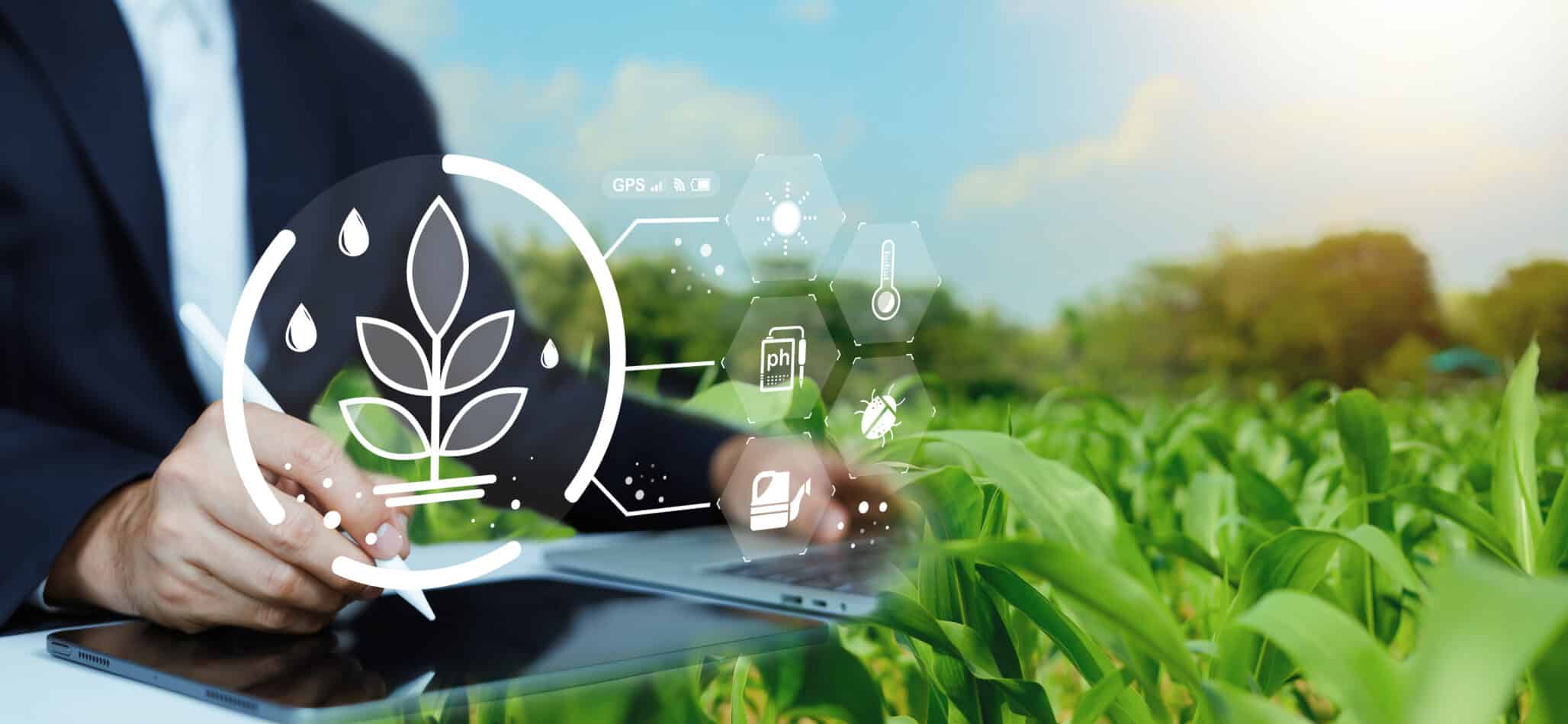
Researchers increasingly evaluate how genetics, crop protection tools, digital technologies and agronomic management practices can work together as a complete system rather than as individual products.
That systems-focused approach is becoming increasingly important as growers face tighter margins, greater weather variability and mounting pressure to produce more from every acre.
From Product Thinking to Systems Thinking
One example involves the development of short-stature corn.
Initially, researchers viewed the concept primarily as a way to improve crop resilience against extreme weather events. As they learned more, however, they discovered additional benefits that extended far beyond plant height.
“We learned that we can actually plant more corn in the same unit area,” McClerren says. “We can plant at a higher density, which allows a farmer to be more productive on the same piece of land.”
She explains that higher planting populations create opportunities to improve productivity and profitability while potentially enhancing sustainability. Shorter plants also provide greater access to the crop later in the season. That opens new possibilities for management and crop protection applications.
“That shorter stature crop allows for in-season access to sprays or agronomic management,” she says. “That’s when you start to layer in the crop protection piece, and you can think about those crop protection tools differently than you could before.”
Digital technologies add another layer. Researchers can help determine which fields may benefit most from the technology. They identify the most suitable corn hybrids for each field, and recommend planting populations tailored to specific environments.
For McClerren, the lesson is bigger than any individual product.
“I think that’s just a great illustration of how it all comes together,” she says.
Unlocking What Breeding Can’t Reach Alone
Integration is reshaping innovation. McClerren believes gene editing could become one of the most important tools driving the next generation of crop improvement.
The reason has less to do with speed than with access.
“There are parts of the genome that are what we call essentially fixed,” McClerren says. “Our ability to introduce variation into those areas and understand what the performance looks like offers tremendous potential.”
McClerren sees gene editing as a natural extension of breeding rather than a replacement for it.
“It’s deployed in breeding, and it’s a really important way to introduce new, unique variation into our genetic base, into our seeds, to unlock performance,” she says. “It’s creating step-change performance through natural technology that would have taken decades to get to otherwise.”
The technology becomes even more powerful when paired with modern breeding systems.
“What we do have is a very unique system on the breeding side that allows us to introduce the edits that we create really rapidly into our rapid-cycle breeding process,” she says. “Which means we get to do more cycles per year of genetic gain to assess which of those edits are really going to make the difference.”
Rather than searching for a single breakthrough, researchers evaluate many potential edits across diverse germplasm. They work to identify the combinations that deliver the greatest value.
“We’re trying to win the game on multiple edits across lots of diverse germplasm to create step change in how products perform,” McClerren says.
The Next Wave of Seed Innovation
Artificial intelligence will likely play a growing role in that future. But, McClerren views AI primarily as an accelerator rather than the destination.
The industry has used machine learning and computational tools for years. Newer forms of generative AI and agentic AI create opportunities to connect research systems, improve workflows and speed decision-making.
“We have over 250,000 decisions [across our R&D organization] being made every day with AI,” McClerren says. “Now, how do you connect all of those various models together in an end-to-end workflow to speed up the overall innovation cycle?”
She believes combining cutting-edge tools like AI with gene editing may represent the next major leap in agricultural innovation, comparing the current moment to the introduction of biotechnology traits.
“The introduction of biotech traits radically transformed agriculture,” she says. “The introduction of gene editing is accelerating what we’re already doing and it unlocks the next wave of product systems or technology systems for the grower.”
For an industry increasingly focused on productivity, sustainability and resilience, the biggest breakthroughs may come from multiple technologies. Instead, they may emerge from how technologies work together.
“I think the message would be that we are standing at the precipice of another step change in innovation,” McClerren says.
The handshake is giving way to something far more integrated.
Editor’s Note: Bayer invited me to its Innovation in Crop Science meeting in St. Louis. It was the first time the company has opened the event to media. The internal gathering brings together researchers and technical teams from across Bayer’s R&D organization. They share ideas, discuss emerging science and explore new approaches to crop improvement. The opportunity provided a rare behind-the-scenes look at the conversations, technologies and scientific advances shaping the future of plant breeding. This is part of three stories sharing insights from a series of interviews during the event.